We’re going there again!
2006 - because it was my favourite year and feels like an iconic time in my retail life.
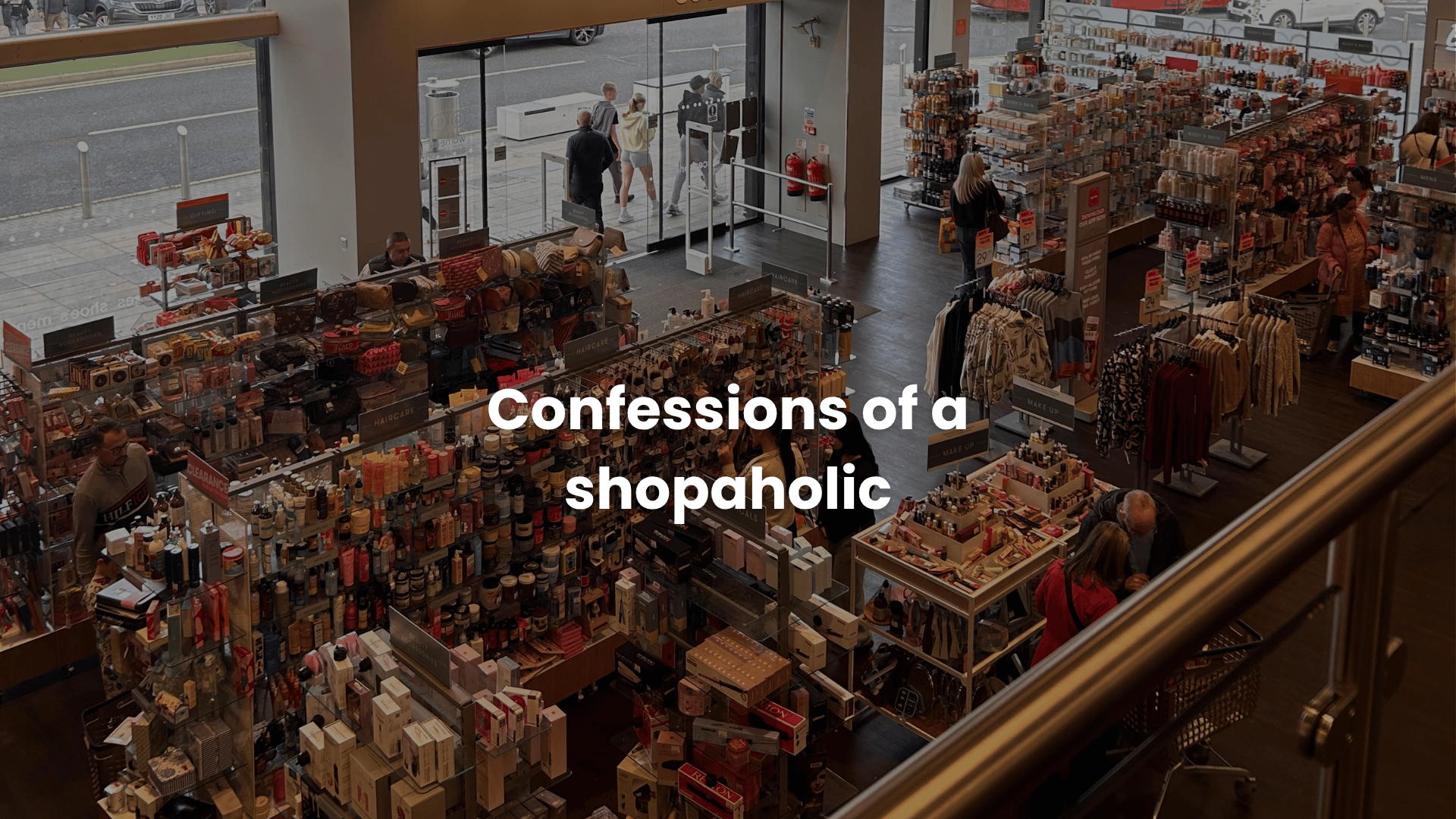
As I’ve mentioned before, I worked as a Store Assistant at Lush. The Metrocentre was a dangerous place to work at the age of 16, especially as a self-diagnosed shopaholic (a diagnosis I retain now I’m in my 30s). I was a sucker for a bargain, for a sale, for any dose of shopping I could get my hands on. I loved the moment of buying a beautiful dress (that I would literally wear once), the feeling of holding the dress in the queue as I waited to pay. It was a chemical reaction.
Now I’m in my mid-30s (we won’t say which side I’m closer to), I still yearn for that feeling. I still shop in the same way I did as a teenager, just with a little more cash to hand, and the shops have got a lot better at providing the happy experience I crave.
What makes me qualified to write about shopper psychology? Well, my sister is a psychologist, and I’ve discussed this topic with her extensively. But the real qualification is simple: everything I’m about to talk about has happened to me, in a shop that I really didn’t need to be in.
There’s a name for this: shopper psychology, the study of how sensory cues, decision-making biases, and stress responses shape what a customer notices, wants, and eventually buys. It’s the science behind browsing, queueing, and impulse buys alike, and it turns out I’ve been a living case study for a long time.
The dopamine aisle
The best part of shopping is the 30 seconds before you buy something. you know the feeling. Spotting the sale sticker, doing the maths, deciding. My brain can barely tell the difference between finding a bargain and finding a fiver in the pocket of a coat I haven’t worn for a year.
Stanford neuroscientists put people in an fMRI scanner, then showed them products, then prices, and then asked them to decide whether to buy. The nucleus accumbens (the brain’s reward-anticipation centre) lit up the moment a desirable product appeared, well before the purchase decision was made. But flash a price that felt too high, and a different region (the insula cortex) switched on instead, acting as an internal alarm bell for financial regret (a feeling I’ve felt all too often). In this experiment, from brain activity alone, researchers could predict whether someone was about to buy something, before they’d consciously decided (Knutson et al., 2007).
Put simply, the anticipation of a deal does more psychological work than the deal itself, which is why a 20%-off sticker feels better than the 20% you save.
Decision fatigue
I’ve spoken about my obsession with the bandage skirt from Topshop in 2009 recently. Back in 2009, I was a student in Edinburgh and spent many hours in Topshop on Princes Street, trying on every colour of skirt they stocked and eventually buying the first one I tried on, making me slightly furious, but unsure why I was so annoyed.
Turns out there was a reason, and it wasn’t just because I was being indecisive.
In a now-famous experiment, Columbia’s Sheena Iyengar and Stanford’s Mark Lepper set up jam-tasting tables in an upmarket grocery store, one with 6 flavours, and one with 24. The 24-flavour table drew more browsers. The 6-flavour table sold roughly 10x more jam (Iyengar & Lepper, 2000). More options generated more looking and less buying, because weighing 24 near-identical jars is tiring work, and tired shoppers tend to walk away rather than decide.
The more decisions a brain has already made that day, the less patience it has for the next one. It’s a useful principle well beyond the jam aisle: the fix for choice overload usually isn’t zero choice, it’s fewer, better-curated decisions. If choice can create friction, then an appointment shouldn’t create another decision tree on top of it.
The psychology of the checkout queue
I have (on more than one occasion) stood in a supermarket queue and felt a disproportionate amount of rage over a till roll running out. But it’s never really about the till roll, or that person who is taking forever to pack their bags.
Service-design researcher David Maister described this back in 1985, in what’s probably still one of the founding texts on the subject: unoccupied time feels longer than occupied time, and unexplained waits feel longer than explained ones (Maister, 1985). His eight propositions describe what the queueing brain is doing while the clock runs, not the clock itself.
It’s easy to miss that this unexplained, static queue reads to the nervous system as a low-grade threat, with no progress, no information, and no control, which is exactly the combination that makes a wait feel far worse than the clock says it should.
None of this needs a lab to act on, it just means telling a customer how long a wait is, giving them something useful to do inside it, explaining what’s happening if there’s a hold-up, and (where possible) handing back some control: a time slot instead of an open ended-queue, a virtual queue so they can go and occupy their time somewhere else, giving them something to browse while they wait, or simply letting staff see demand building before it turns into a queue at all.
The Golden Quarter makes everyone go feral
I’ve never queued outside a shop for anything, not a watch, a sale, or a TV. But I have added something to my basket at 11:58pm because a countdown clock told me to, which is arguably worse.
The period between October and December is called the “Golden Quarter” for a reason. It’s the three months when a hugely disproportionate share of the year’s revenue gets decided, and shopper behaviour changes to match (Epos Now). Somewhere in the middle of it sits Black Friday, the one day a year that turns otherwise sensible adults into people queueing outside a shop at 4am for a TV they hadn’t planned to buy at all.
Scarcity does a lot of this work, and retailers have understood why for 50 years. In a 1975 study, researchers showed people identical jars of cookies, one holding 10 and one holding two. They found that the near-empty jar’s cookies were rated as more desirable, purely because there were fewer of them (Worchel, Lee & Adewole, 1975). “Only 3 left” and “while stocks last” are the retail version of that jar, and more recent research on scarcity cues and social proof shows they consistently manufacture urgency and a fear of missing out that pushes people toward buying on impulse, whether or not they meant to (a 2025 study in Behavioral Sciences).
There’s a darker side to this psychology. Create enough urgency, enough scarcity, and enough social pressure, and shopping stops feeling like a calm decision and starts to feel frantic, like a race.
Your shop is talking
Smell memory is relentless. I couldn’t tell you what I bought on half the shopping trips I’ve been on, but I can tell you exactly what the Metrocentre smells like (chlorine, weirdly). Retailers know this too (that smell memory is powerful, not how clean the Metrocentre is).
Scent researchers like Aradhna Krishna and Bertil Hultén have spent two decades building a genuinely solid academic case for this: a store’s smell shapes dwell time, perceived product quality and purchase intent, largely without the shopper ever registering that a scent is there at all. Walk past a bakery pumping out the smell of fresh bread, or a candle shop with the diffusers on full, and notice how much longer you linger.
Sound does something similar to your feet. Ronald Milliman’s classic supermarket study found that slowing background music tempo down slowed shoppers’ walking pace to match, and total sales rose by 38.2% compared with fast-tempo music, because slower feet spend more time near the shelves (Milliman, 1982). No one said anything different to me as I entered the Green Mall, they just chose the smell and how fast the songs were.
Retail therapy is real
I have (many times) bought three very similar candles from TK Maxx on a sad Tuesday, and felt so much better by the time I reached the till.
Researchers at the University of Michigan found that making shopping choices measurably reduced residual sadness, not because buying things is inherently soothing, but because choosing restores a sense of personal control that sadness tends to strip away. The effect held even for hypothetical purchases where nobody spent any money. (Rick, Pereira & Burson, 2014; University of Michigan summary).
That’s a narrower finding than “shopping makes you happy”: the choosing restores a feeling of control in the moment, not lasting wellbeing, and it clearly doesn’t work on every difficult emotion.
So on those Tuesdays when that happens, I’m not being frivolous. Psychologically speaking, I’m doing emotional admin, and that’s what I’ll be telling my husband the next time he asks why there are so many shopping bags in the house.
Proving the nucleus accumbens theory
Shoppers aren’t rational. I’m very irrational and retailers aren’t always straightforward about it either, but every queue, every product recommendation, every booking flow, store layout, and “only three left” message is asking a customer to make a decision, the same decision I was being asked when I was 16, but there are better instruments pointed at it now.
I didn’t know I was proving a nucleus accumbens theory. I just loved the dress. The retailers who understand that properly are finding ways to make the decision easier, for all of us, every time we walk in.
Quick answers
What is shopper psychology?
The study of how sensory cues, decision fatigue and stress responses shape browsing and buying behaviour in a retail environment.
Why does anticipating a purchase feel better than the purchase itself?
fMRI research shows the brain's reward centre activates when a desirable product appears, not when it's paid for, so the build-up does more of the emotional work than the transaction (Knutson et al., 2007).
Does offering more product choice increase sales?
Not necessarily. A well-known jam-tasting study found a 6-flavour display sold roughly ten times more than a 24-flavour one, because too many similar options make deciding harder rather than easier (Iyengar & Lepper, 2000).
Why do queues feel longer than they actually are?
Because unexplained, unoccupied waiting reads to the nervous system as a small loss of control, not because of the clock. Clear progress and information make an identical wait feel shorter (Maister, 1985).
Does scent marketing change what people buy?
There's a genuine academic literature on this (researchers like Aradhna Krishna and Bertil Hultén), showing scent shapes dwell time and purchase intent even when shoppers never consciously notice the smell. Treat any single viral statistic about it with more scepticism than the underlying research deserves.
Is retail therapy backed by science?
Yes, in a narrow sense. University of Michigan research found that making shopping choices restores a sense of personal control and reduces residual sadness in the moment, though the effect doesn't extend to anger, and it isn't evidence that shopping is good for your mental health more broadly (Rick, Pereira & Burson, 2014).
Why does Black Friday turn people feral?
Scarcity and urgency cues, like "doorbuster," "while stocks last" or a countdown clock, trigger the same psychology as a jar with only two cookies left in it: an identical item feels more desirable simply because it looks limited. Push that hard enough, at national scale, on a single day, and calm decision-making is usually the first thing to go (Worchel, Lee & Adewole, 1975).