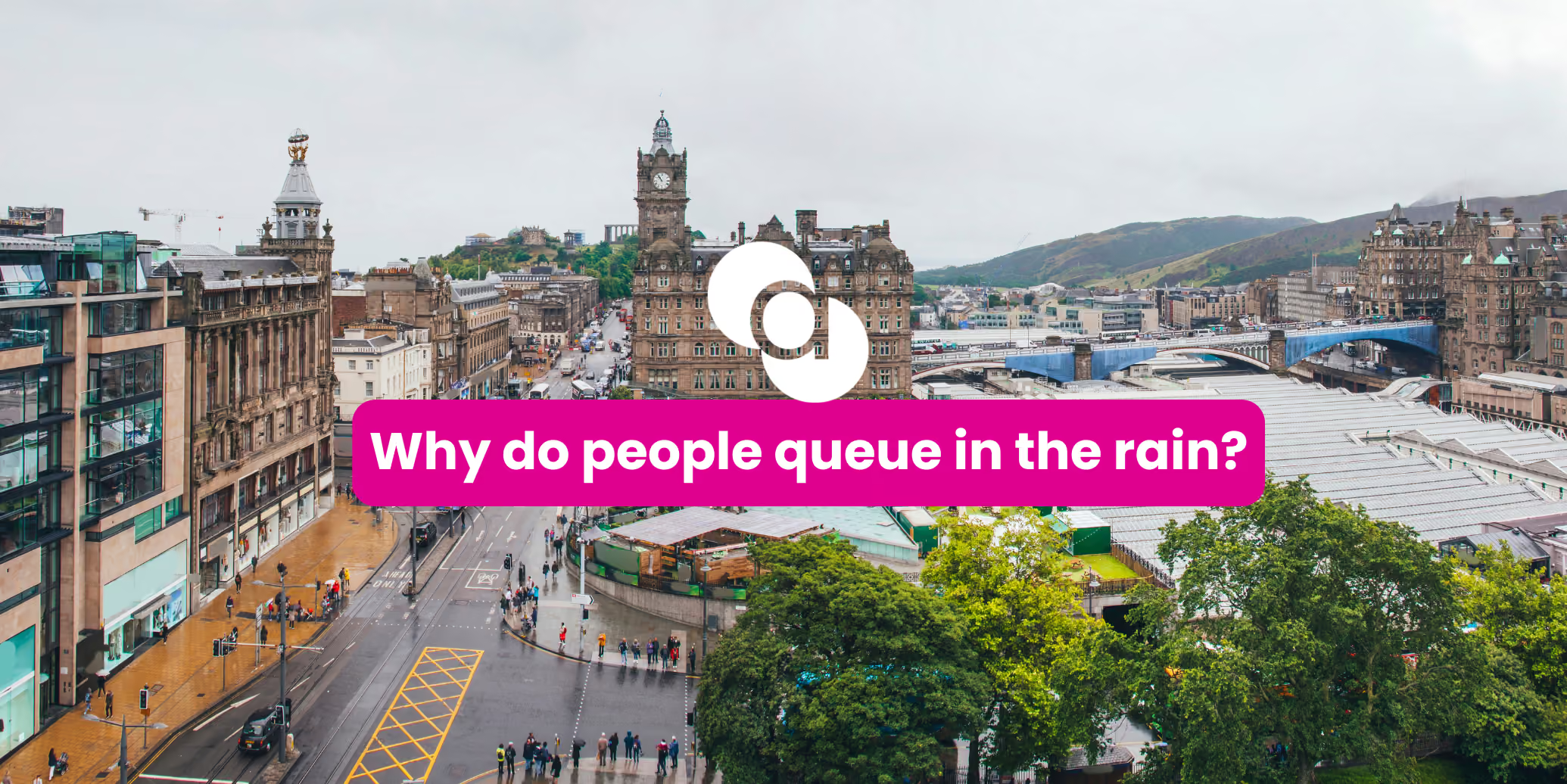
This morning I was walking down Princes Street in Edinburgh (in the pouring rain I might add) and I saw a queue of people outside the Swatch shop. It was 9am and the line was perhaps 20 people deep. I wondered what was going on, and because I’m incredibly nosy I had to Google it. It turns out that the Royal Pop Collection, Swatch’s latest collaboration with Audemars Piguet, had landed five days earlier, and the city had basically been queuing in shifts ever since.
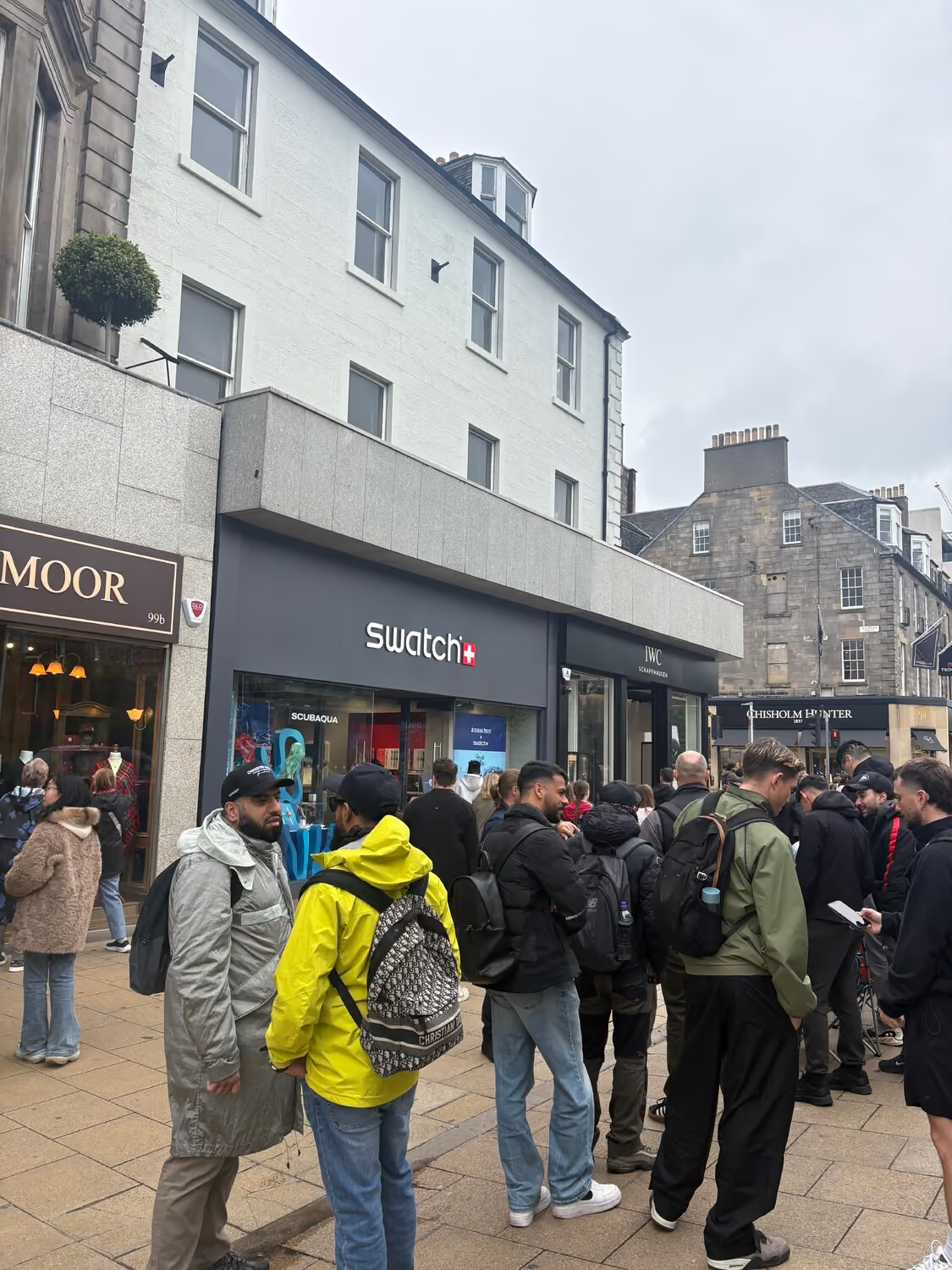
I stood on the opposite side of the road for a minute (as the rainwater slowly soaked through the bottom of my shoes, not a good day to wear heels) and pondered for a second. Why do people sit in the rain (yes, they had chairs) and queue for a watch? (I don't think it's just because it’s only sold in-store).
What people are actually queuing for
The watch is the reason on paper. The real reason is harder to put into a single sentence. People queue because the queue itself is the proof. You were there, you waited, you got one. The product then becomes the souvenir of the experience as much as the other way around. A story comes attached. That story then travels: to Instagram, to the group chat, to the friend who didn’t come along, or... to the Appointedd LinkedIn page. A shot of a £350 Swatch is worth more in attention than the watch is worth in money.
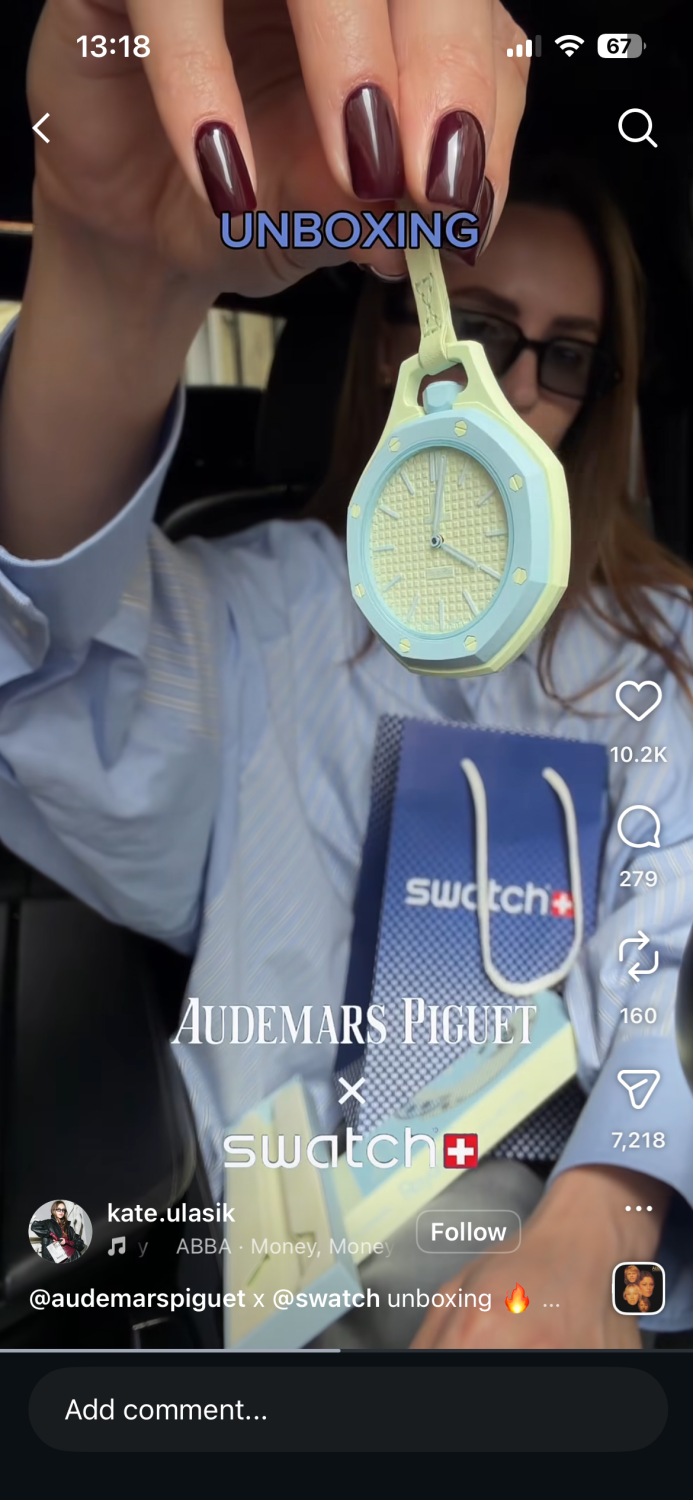
There’s also a second motive. Belonging. Standing in a line with however many other people who care about the same object, on the same morning, is a way to feel part of something. You walk away with a watch and a story, perhaps even a new friend. Apple worked this out years ago, and Supreme built a business on it. Swatch is now in the same company, which is a strange and rather brilliant place for a Swiss plastic watch brand to be.
So far, so familiar. The more interesting question is what brands do about it.
Swatch’s choice: close the door
When I got into the office (and dried off and caffeinated), I kept researching. After reading multiple articles and social media posts, it comes across that Swatch has a rule about people queuing outside its stores. If more than 50 people are queuing outside a store, the store closes. Customers are asked to come back another day. This time, they are telling customers that the collection will be available for months and so there’s no need to camp out.
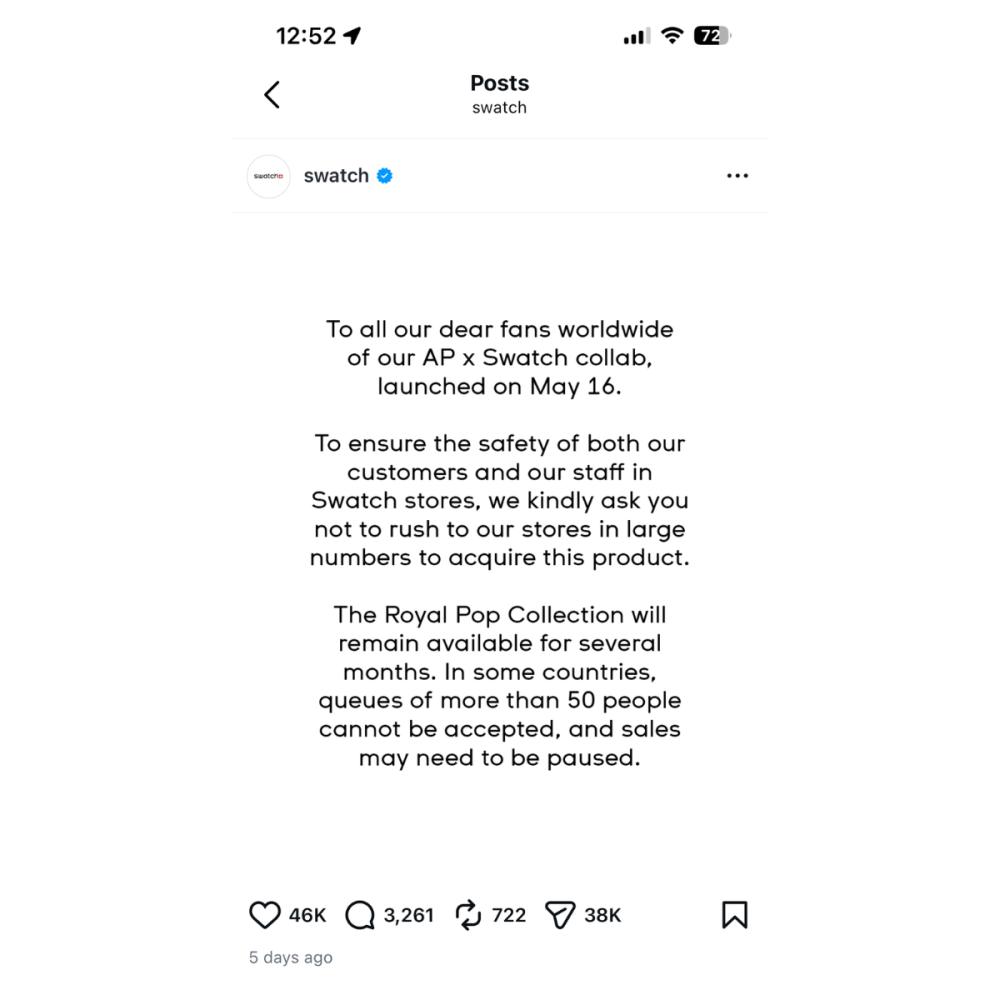
On the surface, this is crowd control (and some of the crowds really did need to be controlled). But reading more carefully, it’s actually quite clever brand control. Capping the queue keeps the scarcity intact without the chaos that usually comes with it. No crushing in the doorway, no fights over allocations, and people talk about how impossible it was to get one rather than how unpleasant it was to try. It’s why, five days after the launch of the watch, people are still queuing outside the store.
Play
Video: Swatch store - Edinburgh
Victoria’s Secret Birmingham: Convert the crowd
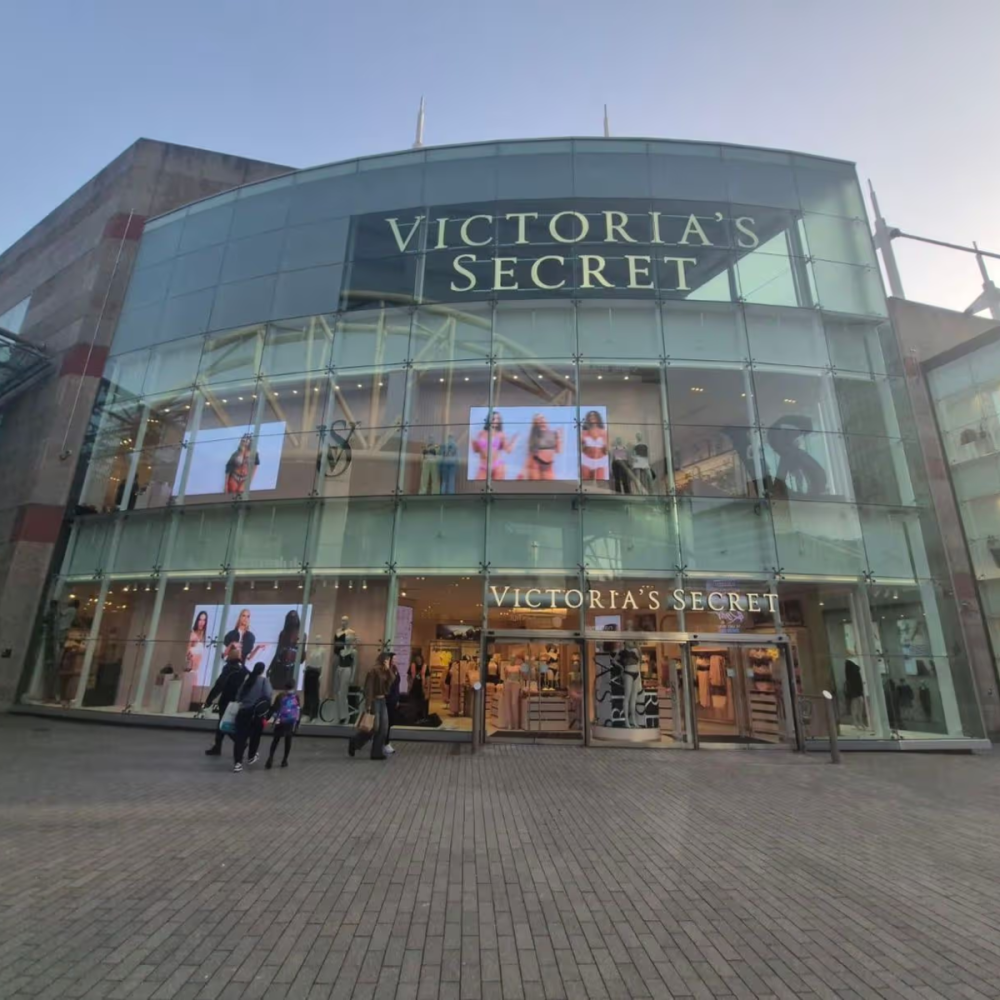
Now look at the other approach. When Victoria's Secret reopened after its 2-year hiatus in Birmingham, the brand also expected queues. Rather than closing the door, they gave people a reason to step out of the line and straight into the store, by having them book.
The offer was simple: book a bra fitting for the opening weekend and you received a goodie bag containing a signature scent, a bra fit tape measure, and an exclusive 10% discount valid for that weekend only.
That changed the maths of the launch. A walk-in is a guess. A booked fitting (by contrast) is a named customer, a known time-slot, a stylist already on the floor, and a basket half-built before the customer walks through the door. The brand turns the spectacle of the opening weekend into a database, and the database into revenue that compounds long after the flags come down.
Both brands are managing demand. Swatch is managing it down to protect the story. Victoria’s Secret is managing it across to convert the story into customers. Neither is wrong; they’re just answering different questions.
Why luxury collaborates with the high street
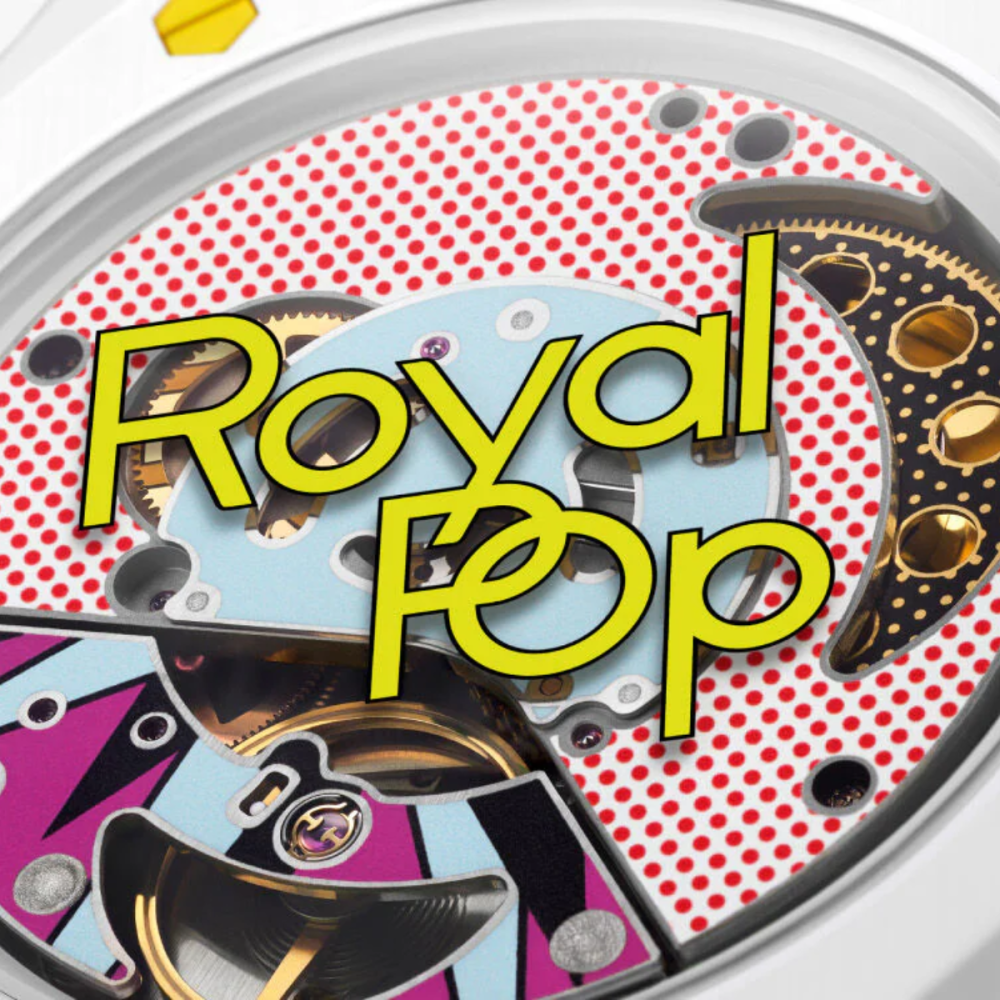
Audemars Piguet’s name being on the dial of the watch got me thinking. Why are luxury houses lending their names to such an accessible brand?
The collaboration is the third in a sequence: MoonSwatch with Omega in 2022, Fifty Fathoms with Blancpain in 2013, and now Royal Pop.
The luxury brand lends its codes. The accessible brand lends its reach. Audemars Piguet gets a new generation looking at its design language 10 or 15 years before that generation can afford the real thing (should they be that lucky). Swatch gets a queue and the cultural weight that comes with it. Each side borrows something it doesn’t have. Neither loses what it came in with.
It’s a much smarter strategy than either trying to be the other. A luxury house can’t manufacture mass appeal without diluting itself. A high-street brand can’t manufacture luxury without looking like it’s trying too hard. The collaboration sidesteps both problems by being honest about what each side actually is.
The bit retailers are beginning to notice
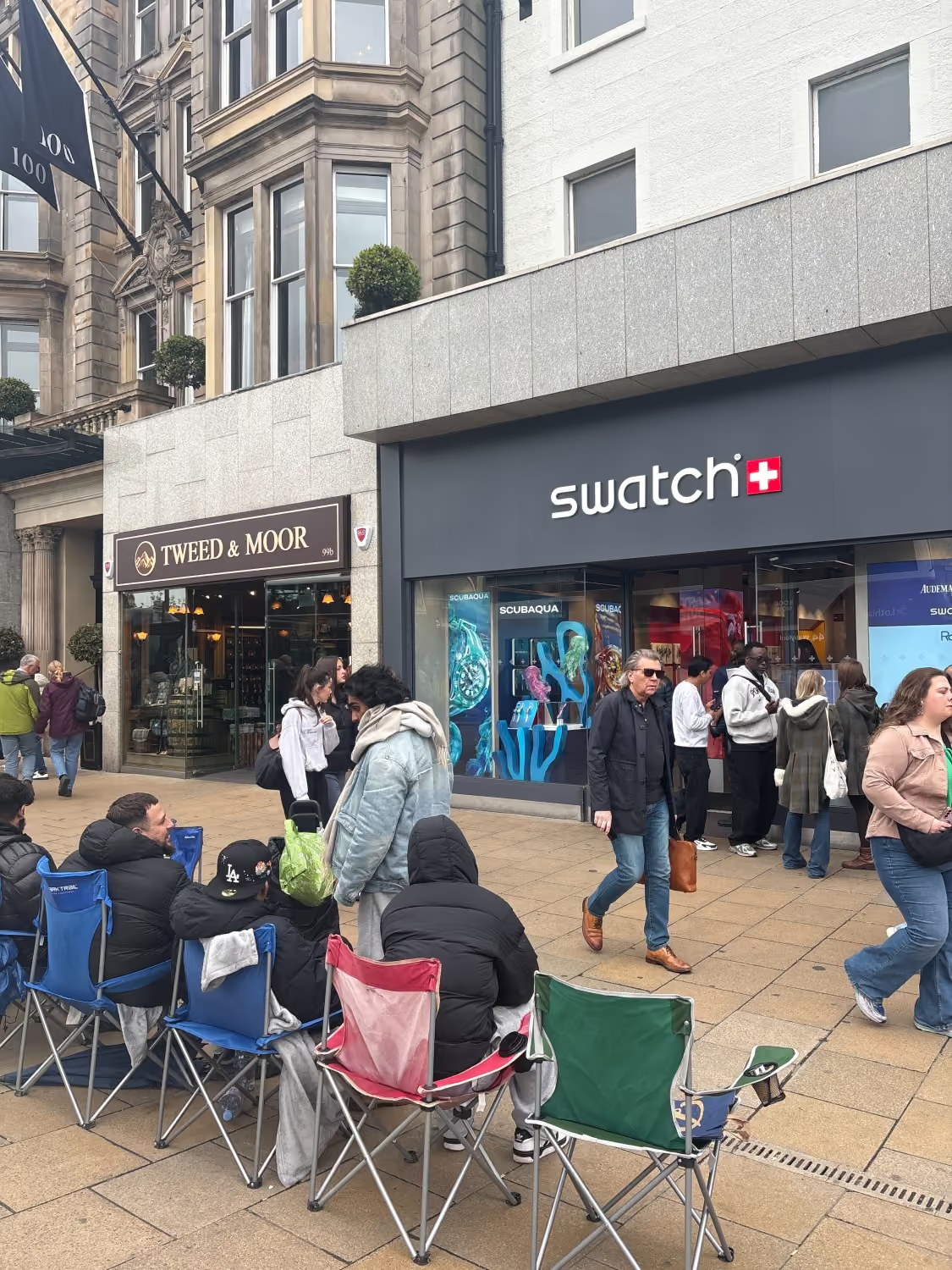
The reason I stopped on Princes Street to look at the Swatch queue is because it says something interesting about where retail is heading.
A queue is intent made physical. People are putting time, weather (in this case the traditional weather Edinburgh is known for) and effort behind a purchase they haven’t yet made. That’s a stronger signal than any cookie, any browse history, and any look-alike audience. It’s what I’ve been writing about for the past few months; it’s declared intent, not inferred. In real time. The brands that are working out what to do with it end up with a different class of customer.