
In 2023, the Eras Tour became the highest-grossing concert tour in history. It made over $2 billion. The merchandise lines were hours long. The spend-per-head was staggering. But Taylor Swift didn’t wait to see who’d turn up on the night.
The Verified Fan presale required registration months before tickets went on sale. The intent was declared before the tour had even announced dates. Every single person in every stadium in 52 countries bought their ticket months in advance. They declared intent in a credit card transaction before they’d even sorted travel, created incredible outfits, and arrived (by any commercial definition) as pre-qualified buyers.
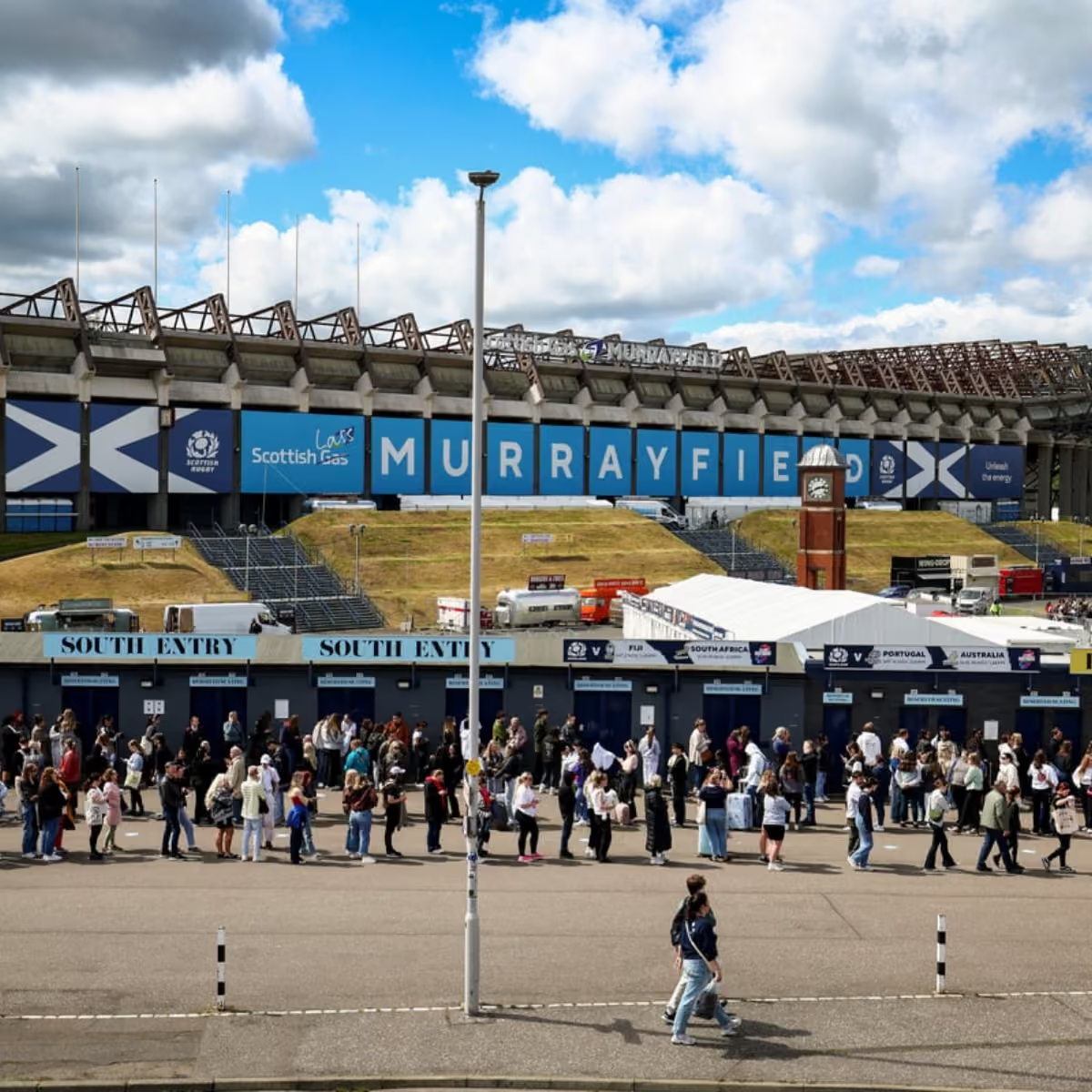
Of course, a Taylor Swift concert and a Saturday afternoon in a retail store aren’t remotely the same thing. One has a waiting list of millions. The other is competing with Netflix, ASOS, and a rainy high street. But both share one advantage: knowing who’s coming before they arrive (see what I did?)
Traffic comes in. Some people are browsing, some are killing time, some are using the changing room as a wardrobe consultation service with no intention of buying. Some are genuinely ready to spend but can’t find the right person to help them. The store team, operating on general footfall data and last Tuesday’s intuition, is doing its best.
Taylor engineered her crowd. Retail has the tools to do the same.
Footfall counts who came. Bookings tell you who’s buying.
Footfall is the oldest metric in physical retail and for good reason: for decades, more people through the door reliably meant more sales. The correlation made sense. It measured something real.
The opportunity now is to layer in a sharper signal alongside it.
Footfall measures volume. It counts how many people cross the threshold. It says nothing about whether those people had any intention of spending when they walked in, what they wanted, whether the right products were in the right place, or whether the right associate was available to serve them. Footfall is a headcount, and headcounts (on their own) don’t tell you much about tomorrow’s revenue.
Moneyball (the book, not the film, though the film is good) tells the story of how the Oakland A’s started optimising for numbers that actually predicted wins, rather than the stats the sport had always tracked. The insight wasn’t that the old metrics were wrong. It was that there were better ones available, and the teams using them had a structural advantage.

Retail has the same opportunity. Physical retail conversion rates sit between 20-40%, meaning that somewhere between half and four-fifths of everyone who walks in on any given day leaves without buying. Those odds can be improved before anyone sets foot in the store, by changing the composition of the visits themselves. Booked Intent® is retail’s equivalent of on-base percentage: not the only metric that matters, but one that’s considerably closer to revenue than raw traffic counts.
The visit worth designing for
Browsers are a fact of retail. A person who wanders into a fragrance hall, has a pleasant time, and leaves without purchasing probably just wasn’t ready to buy. That’s fine. The opportunity is in building a second category alongside them: visitors who arrive already knowing what they want.
The conversion problem is (at root) a traffic quality question. And traffic quality can be addressed upstream, before anyone sets foot in the store.
Think about how the highest-converting retail interactions actually work. A customer books a personal shopping session at Harrods. They arrive knowing roughly what they want, having described it in advance. The stylist has pulled options. The visit has shape before it starts. Of course that customer converts. The whole interaction was structured around a stated need.
Compare that with the walk-past. A customer spots a window display on a rainy afternoon. Something catches their eye. They come in. No allocated budget. No clear need. The floor associate is essentially starting a first date with no prior messages exchanged.
Both are valid visit types, but only one can be prepared for in advance. High intent store visits get created - through booking flows, pre-visit consultation paths, appointment prompts at the moment a customer searches, browses, or raises a question. The moment a customer tells you they’re coming, what they want, and when they’ll arrive, you’ve moved from probability to pipeline.
Before the door opens, the sale is half made
The most commercially valuable moment in a high-intent retail visit is the window between when someone books and when they walk in.
That gap (even if it’s just 48 hours) is where the value compounds.
With a structured booking, you know who’s coming. You can match them to the associate with the right product knowledge, have the right inventory visible, the right options pulled. If they specified a budget or a use case in a pre-visit form, the team is building on a brief the customer wrote themselves.
The numbers make this concrete. Charles Tyrwhitt drives 11% of revenue through booked interactions. Victoria’s Secret sees 100% conversion rate from booking to sale. Those are outputs of a system that shaped which customers were arriving and what state they were in when they got there.
Training, store design, and merchandising all matter and keep on mattering. What booking adds is a layer earlier in the journey, an intent gap that can be closed before the customer arrives, rather than bridged at the point of sale.
So why isn’t everyone doing this already?
Fair question. Many customers already book ahead in the categories where confidence matters most: luxury, beauty, jewellery, nursery, flooring, automotive. The behaviour is established. The demand is there.
The challenge is operational. Retail has spent decades optimising for anonymous footfall, building systems, processes, and teams around the assumption that you don’t know who’s coming until they’re standing in front of you. Shifting toward declared demand requires a different infrastructure, and changing infrastructure is rarely the path of least resistance.
The good news is that the infrastructure already exists. It just hasn’t been widely applied yet, which is where the structural advantage comes in.
The operational upside
There’s a version of this argument that stops at conversion. It’s a good argument. It also undersells the full picture.
When a meaningful share of in-store visits are booked in advance, the entire operational picture sharpens. Staffing models move from last week’s footfall and last year’s seasonal data to what customers have already told you they need, at which location, on which day. Inventory decisions get more precise. Associate time goes where it generates return.
The booked customer spends more AND their visit costs less to service. Associate time goes to a customer who arrived with a stated need, was greeted by someone who’d already read that need, and bought. The economics of a high-intent visit are better at both ends, and the cumulative effect across a week, a quarter, a year, is significant.
Engineering the crowd
Back to Taylor Swift and Moneyball for a moment.
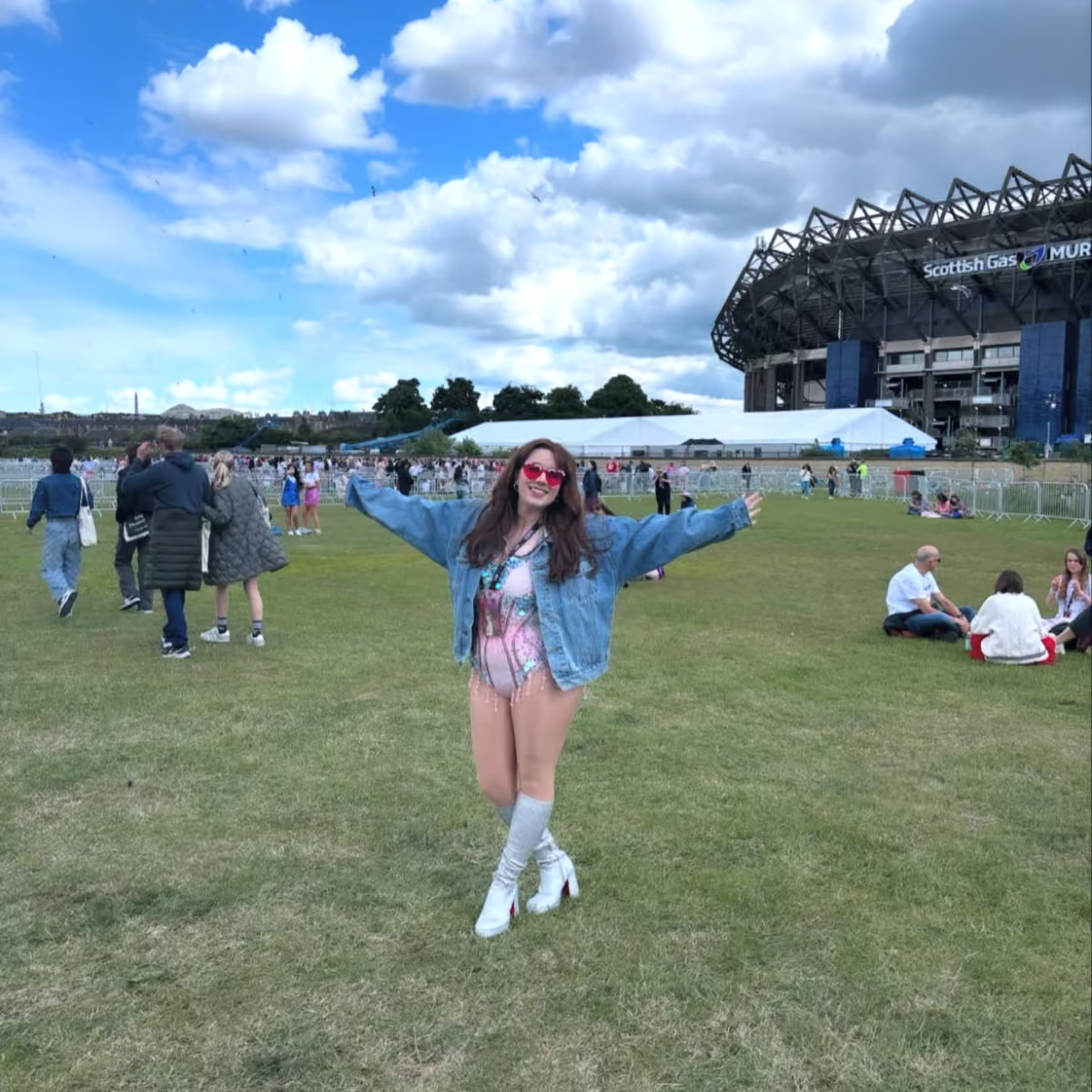
What made the Eras Tour commercially exceptional wasn’t the scale of the stadiums. It was the composition of the crowd: the people who had actively declared their intent, planned their attendance, and arrived ready to participate. Swift’s team built the infrastructure (the Verified Fan system, the pre-registration, the advance commitment) that ensured the right crowd showed up. That’s the Moneyball move. Find the metric closer to the outcome, build the system around it, and the results compound.
Booked Intent® is Appointedd’s term for the signal that makes this possible in retail. When a customer books, they hand you the five Ws: who they are, what they want, when they’ll arrive, where they’ll be, and why they’re coming. That’s a brief. That’s forecastable demand. That’s a buying visit, and it started before the door opened.
Getting more people through the door is one strategy. Getting people through the door who already know what they want is a different one, and it starts long before anyone shows up.
Want to see how Appointedd helps enterprise retailers shift the balance from browsing to buying? Take a look at our website.

.png)
.avif)