I booked an appointment to find the perfect dress for my wedding, and I’ll admit I booked more than one.
Before Marrime, I’d been to four bridal shops in Edinburgh. I’d booked an appointment at every one, and every one was lovely, some better than others, to be fair, but I still hadn’t found the dress of my dreams.
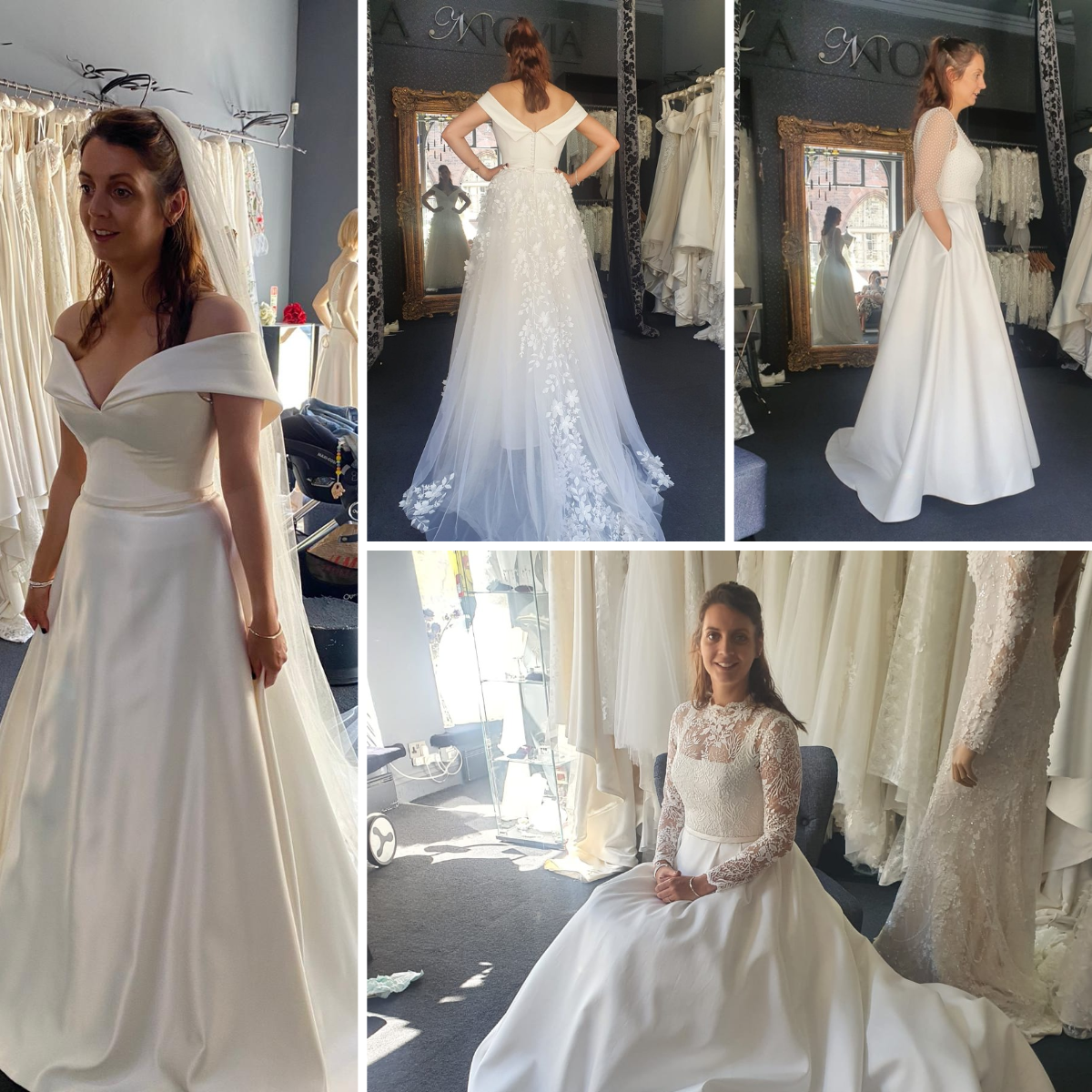
Then a friend recommended Marrime in Jesmond (Newcastle). I booked for three weeks’ time, paid my deposit, and this time the booking form asked me things. My likes, my dislikes, my must-haves, all of it. A day later, an email arrived from Honey asking me to choose five shortlist dresses, which she promised would be ready and waiting when I arrived.
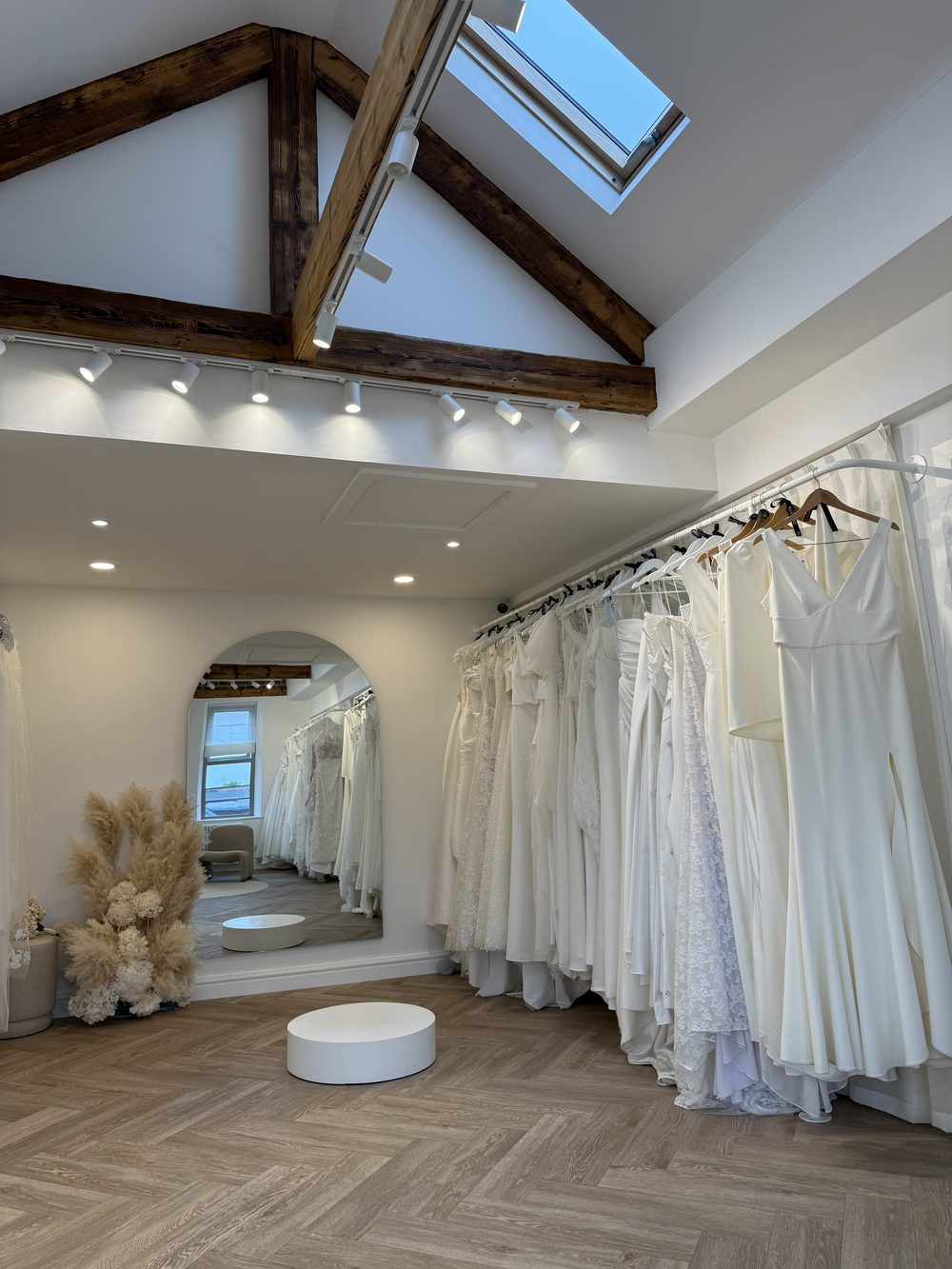
On the day, I walked into probably the most aesthetically pleasing shop I’ve ever been in, and Honey greeted me with the warmest hug, like we’d known each other for years. Then she guided me over to the dresses. True to her word, she had pulled the five I’d chosen, plus a wildcard that I shunned immediately.
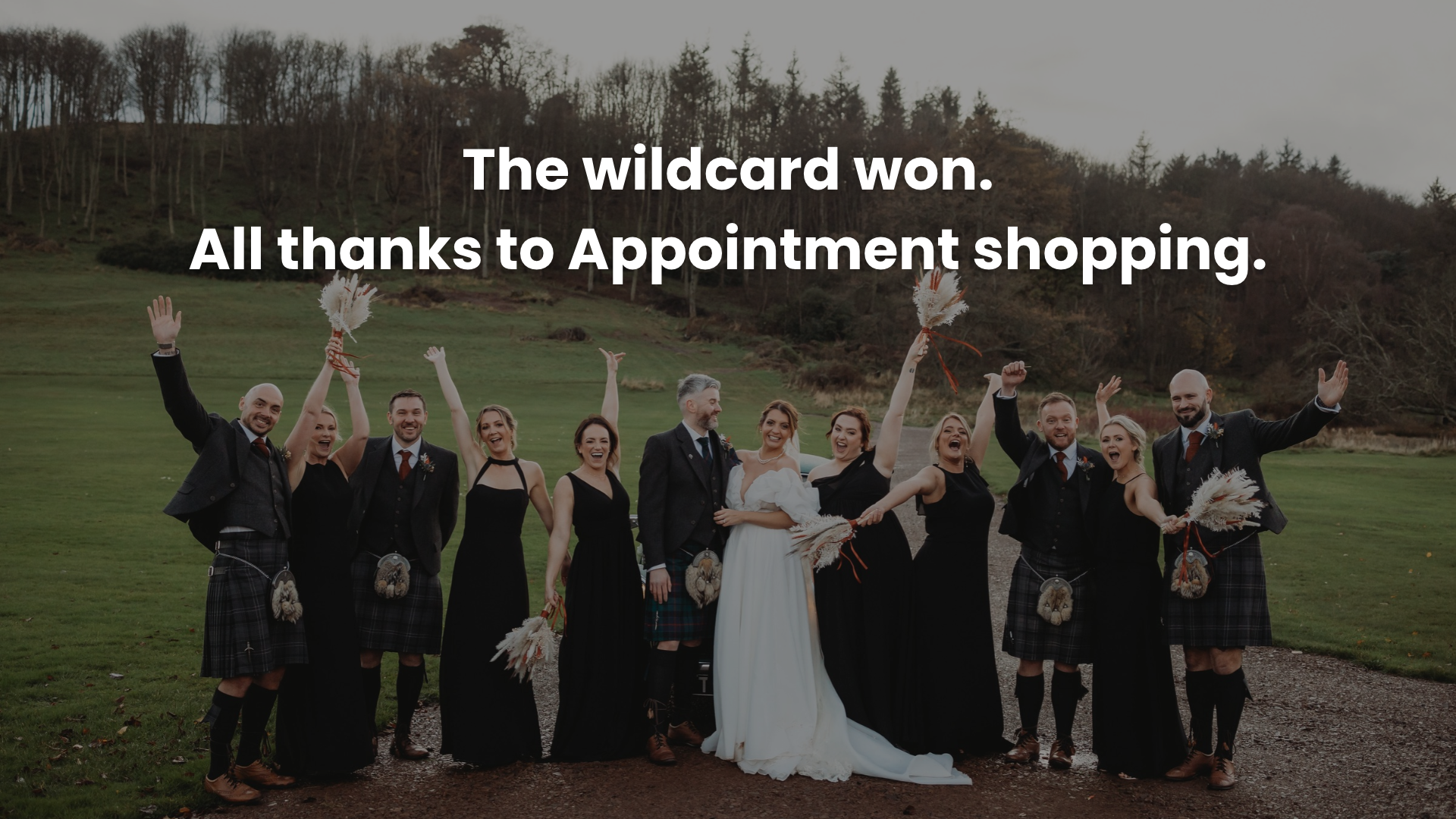
I tried dress after dress. I loved them all, but none of them had that spark. Until, reluctantly, I tried the wildcard (you can guess where this is going). Honey had pulled it because she knows exactly what she’s doing. She’d used everything I told her before I arrived and understood exactly the type of dress I’d like. I stood in front of the mirror and cried. Big, fat, happy tears. The search was over. I had found THE dress.
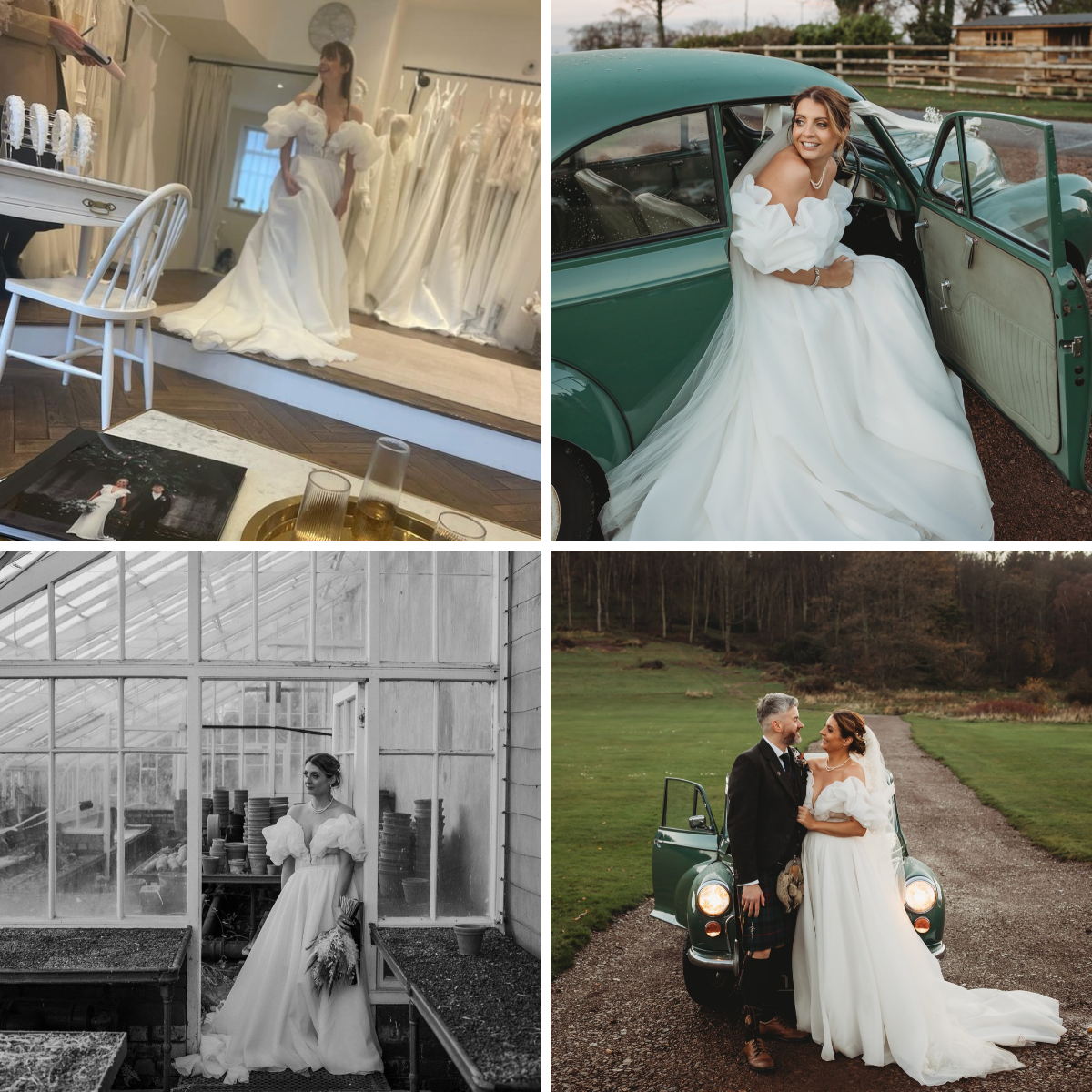
That, in a vision of tulle (much like me), is appointment shopping.
I’d had lovely appointments before Marrime. They were all versions of appointment shopping too. What changed was the information. Everything that made that morning special started weeks earlier, with a booking that asked the right questions and a retailer that did something with the answers. The rest of this article is about how enterprise retailers do the same thing across hundreds of stores, and how to tell if it’s paying off.
What is appointment shopping?
Appointment shopping is when a customer books a set time to shop with a retailer, in store or over video, instead of turning up unannounced. The retailer knows who’s coming and when, and often why, so the visit can be prepared rather than improvised.
Appointment Commerce is the bigger idea sitting behind it: treating that booking as the start of the sale rather than an entry in a calendar. Who greets the customer, what’s ready for them, what they hear afterwards, and what the retailer learns along the way all count as part of it. The booking is the bit in the middle of the browse and the buy that tends to get overlooked.
What is Booked Intent®?
Booked Intent**® is the demand signal created the moment a customer books an appointment: who they are, what they want, when, where, and why, declared by the customer rather than inferred from their behaviour.
Retail has become very good at reading intent online, from search, browsing, loyalty, and purchase history. A booking adds a different kind of signal. The customer has chosen to commit their time, name a need and (if the booking form asks) share their preferences before they set foot in the store. It’s declared, not inferred, and it arrives before the visit rather than after it.
It’s also what Honey worked from. Nothing about her expertise changed because of a form. What changed was what she knew when I walked in.
Why bridal got there first
Bridal, tailoring, beauty consultations, bra fitting, and personal shopping have something in common. The purchase is personal, it takes some thought, and it goes better with a human on hand. Those are the categories where appointments took hold first, and the ones where retailers have had the longest to get good at it.
Harrods partnered with Appointedd back in 2021. Charlotte Tilbury runs in-store consultations, virtual sessions, and global masterclasses through bookings. Victoria’s Secret rebuilt its bra fitting service around them.
The results of each of these are worth a look. Across the appointment-led categories we work with, conversion from booked appointments approaches 100%, against a typical 2-4% for unannounced walk-ins. Victoria’s Secret converts 100% of its booked fittings into a sale.
This isn’t a like-for-like comparison, and it isn’t meant to be. A customer who has booked has already shown intent, while walk-in traffic includes browsers, passers-by and people killing ten minutes. What the gap shows is how much intent a booking carries, not what a booking creates on its own. Results also vary by category and by how well an appointment is run, so treat the headline as something to test against your own numbers, not a promise.
I’m possibly the biggest skinflint there is (apart from Scrooge), and I still spent over £2,000 on my wedding dress. A big part of that was the personalisation of the service I received, thanks to the questions asked at the time of booking. Was the booking the only reason? No, not really. I needed a wedding dress, and they’re about as high-intent as a purchase could be. I’d have always bought one from somewhere eventually. But it shows what a well-designed booking can do for a customer’s confidence.
A booking isn’t a guarantee, either. I made appointments at four stores prior to Marrime, and I walked out of them having spent nothing (apart from my non-refundable deposit). People reschedule, they change their minds, and occasionally spend different from how they planned. But someone who has picked a time, a place, and a reason has told you far more than someone who walked past the window.
From one boutique to 400 stores
One boutique and 400 stores are very different. Enterprise retail has hundreds of stores, several brands, different markets, associates with different specialisms and more than one way to meet a customer. At that scale the diary becomes infrastructure.
Moss is a good example. It took over 45,000 appointments in a single quarter across 100+ stores. That can’t be managed with a paper book and goodwill.
Volume is only half the story, though. Charles Tyrwhitt saw online bookings jump 48% in its first three months, now drive 11% of its total revenue through appointments, and cut its reporting time from four hours to 30 minutes. That’s scale showing up as commercial and operational results.
A few things move from nice-to-have to essential at that point:
- One booking experience, many locations. Availability that reflects real people, rooms and opening hours across the whole estate, not just the flagship.
- A booking that asks the right questions. A time slot answers when. The who, what, where, and why only arrive if the booking journey is designed to ask for them.
- Data that goes somewhere. A booking that sits in its own system helps nobody. One that reaches the CRM, the POS, and the marketing tools helps the whole business.
- More than one format. In store, virtual, events and masterclasses, each with its own rules, from one place.
- Reporting that follows the appointment through to the sale. If you can’t see what happened next, you can’t improve it.
Scale also brings questions no diary can answer: how stores in different regions trade, whether associates actually use the tool, who owns the data, how consistent the service feels from store to store, and how it all connects to the systems you already run.
Then comes the useful part: what the store does with the information before the customer turns up. Match them with the right associate. Prepare the products. Understand the customer’s preferences. Plan staffing around the day. Personalise what they hear in the run-up. Measure what they came in for, and what they bought.
The value of an appointment is that it gives the retailer information before the customer arrives, and information changes what the store can do with the visit.
Technology captures the intent. People turn it into an experience.
Honey was the reason that morning worked. The booking form didn’t choose the wildcard. She did.
I want to be clear about that split. Technology captures what the customer tells you and puts it in front of the right person. Store associates turn it into something worth travelling for. At enterprise scale, technology’s job is to make that repeatable and measurable across every location, so every store has a Honey with the information, the time, and the tools to do what they do best.
Which makes adoption the part to plan for: training associates to read the booking before the customer arrives, protecting time in the diary for preparation, agreeing how appointment sales are credited, and giving store managers a view they’ll use on the shop floor.
A four-step approach for enterprise retailers
- Choose where appointments create the most value. Start with categories where the purchase is personal, considered, and better with expert help, such as bridal, tailoring, beauty, fittings, and personal styling, and where an associate’s knowledge changes the outcome.
- Get stores ready. Decide who takes appointments, how much time they get, where they happen and how the booking details reach the shop floor before the customer does.
- Measure from day one. Agree the metrics and a comparison group before launch, so you can show what appointments added rather than what would have happened anyway.
- Roll out in waves. Pilot in a few stores or one category, learn what works, then extend across the estate and across formats.
How to measure whether appointment shopping is paying off
An appointment costs something: associate time, sometimes a dedicated space, and preparation. A high conversion rate is encouraging, but it isn’t the same as a profitable programme. A leadership team will want the fuller picture:
- Attendance and no-show rate. How many bookings turn into visits.
- Conversion and average transaction value of attended appointments, set against comparable walk-in visits.
- Revenue per associate hour, and how well appointment slots are used.
- Contribution margin after labour and preparation costs.
- Incrementality. How much of the revenue wouldn’t have happened without the appointment.
Incrementality is the hard one, and the answer is to test for it. Run appointments in a group of stores or a category, compare them with similar ones that aren’t, and look at total sales, not just the booked ones. A customer who was always going to buy a wedding dress tells you very little, but a customer who wouldn’t have visited without being able to book tells you a lot.
Appointments and walk-ins, side by side
I’m certainly not suggesting every shop should be appointment-only. Walk-ins are where retailers find new customers, fill the quiet days, and catch the person who spots something in the window and changes their plans. That’s value worth protecting.
Appointments sit alongside, as a second lane for the customer who’s happy to tell you a bit more before they arrive. A channel, not a side channel.
Choosing an appointment shopping platform
If you’re mapping out a first pilot, Shopify has published a useful guide to getting started, and it’s worth a read. At enterprise scale, the questions tend to shift. Worth putting to any appointment shopping platform you’re considering:
- Can it run one booking experience across every store, brand, and market, while letting each keep its own look and rules?
- Can the booking journey capture the reason for the visit, not just the time?
- Where does the data go once someone books, and how quickly does it get there?
- Can we see a booking through to the sale, by store, by associate, and by category?
- Can store teams use it on the shop floor, on any device, without a training course?
- How does it handle regional differences, permissions, and data governance?
Obviously, I’m going to tell you about Appointedd. This is the territory Appointedd was built for: booking infrastructure for retailers like Charlotte Tilbury, Moss, Space NK, Charles Tyrwhitt, Harrods, and many more, where the booking is treated as a signal worth acting on. We call that Booked Intent®: a customer telling you who they are, what they want, and why before they walk in, which is a different kind of signal from anything browsing can tell you.
Back at Marrime
The hug was remembered, and the dress got the emotion, the attention, and the photos. But the best part of that morning started weeks earlier, when I filled in those booking questions and Honey read them. Everything after that was a team with time to get ready, and a wildcard that only worked because Honey paid attention.
That’s appointment shopping, whether you have one boutique or 400 stores. The booking form isn’t the boring bit.
Also, safe to say the dress was incredible, right?
Quick answers
What is appointment shopping?
Appointment shopping is when a customer books a set time to shop with a retailer, instead of turning up unannounced. It lets the retailer prepare for the visit.
What is Appointment Commerce?
Appointment Commerce treats a booking as the start of a sale rather than a calendar entry. The retailer uses what the customer shares at booking to prepare, personalise the visit, and measure what happens next.
What is Booked Intent®?
Booked Intent® is the demand signal created when a customer books an appointment: who they are, what they want, when, where, and why, declared by the customer rather than inferred from browsing.
How do retailers do appointment shopping?
They offer bookable time slots online, choose the formats (in store, virtual, or events), ask for the reason for the visit at booking, match the customer with the right associate, prepare ahead, and follow up afterwards.
What is an appointment shopping platform?
It’s the software that lets a retailer offer shopping appointments across stores, teams, and formats, capture what customers tell them at booking, and connect that to systems such as the CRM and POS.
Which retail categories suit appointment shopping?
Those where the purchase is personal, considered, and better with expert help, such as bridal, tailoring, beauty, bra fitting, personal styling, and luxury retail.
Does appointment shipping replace walk-ins?
No. Appointments work as an extra lane alongside walk-in traffic, for customers who want to tell the retailer more before they arrive.
Does appointment shipping increase conversion?
In the appointment-led categories Appointedd works with, conversion from booked appointments approaches 100%, against a typical 2-4% for unannounced walk-ins. It varies by category and isn’t guaranteed.
How do you measure the return on appointment shopping?
Track attendance and no-show rates, conversion, and average transaction value for attended appointments, revenue per associate hour and contribution margin after labour costs. To test incrementality, compare stores or categories running appointments with similar ones that aren’t.
How do you get store teams to adopt appointment shopping?
Give associates the booking details before the customer arrives, protect time in the diary for preparation, train teams to use the tool, and agree how appointment sales are credited.