We can predict almost anything in 2026. Your parcel can be tracked to the lamppost, your flight re-routes before the turbulence hits, your phone tells you that “traffic is a bit heavier than usual” and shaves three minutes off your ETA, and even your fridge knows when you’re running out of milk. And yet, somewhere right now, there’s a person staring at a spreadsheet trying to work out whether this Saturday will be busy.
That’s the state of retail demand planning in most stores today. In a world that forecasts almost everything else with a high degree of accuracy, store demand is still treated like the weather in 1952. You look at the sky, check what happened this time last year, and go with your gut. It isn’t anyone’s fault. Until very recently, the signals to forecast store demand properly didn’t exist. That’s changed. Omnichannel retail forecasting is now a viable, measurable discipline, and most retailers haven’t quite caught up.
This article explains what omnichannel retail forecasting is, why traditional methods fall short, and how a single signal (declared intent, captured at the point of booking) turns guesswork into reliable, future-dated demand.
What is omnichannel retail forecasting?
Omnichannel retail forecasting is the practice of predicting in-store demand by combining customer signals across every channel a retailer operates in (website, app, retail media, marketing, mall apps, concierge, WhatsApp, and the physical store itself) into a single forward-looking view. Unlike traditional demand forecasting, which relies on historical sales and seasonal curves, omnichannel retail forecasting uses live, attributable signals to predict who will arrive at which store, when, and what they want.
The most reliable signal in this model is the booking: a declared, first-party commitment from a named customer to visit a specific store at a specific time for a specific reason. This is the foundation of what we at Appointedd call Booked Intent.
Why most retailers can’t forecast store demand accurately
The pattern will be familiar. You staff up for a busy Saturday and then it’s dead. You scale back midweek and the queue is out the door. You plan against last year, and this year has other ideas.
The result is reactive staffing, patchy footfall, and a lingering sense that demand is happening to you rather than for you. Most retail demand planning still runs on a hunch: historical sales, a seasonal curve, a whiff of intuition, and a prayer that nothing weird happens this week. Something weird always does.
Three reasons traditional methods fall down when you try to forecast store demand:
- Historical data describes the past, not the future. Last May tells you what last May did. It doesn’t know your new launch, your competitor’s price cut, or the weather event tomorrow.
- Footfall counters are lagging indicators. They tell you how many people walked past or in. By the time they update, the moment has gone.
- Most digital signals are passive. Page views, ad impressions, abandoned carts, wishlist saves: they show curiosity, not commitment. They cannot reliably predict who will turn up on Saturday at 11.
To forecast store demand reliably, retailers need active signals: ones that come with a date, a place, a person, and a reason already attached.
The trouble with passive signals in retail demand forecasting
Retail has more data than ever. Website visits, product views, add-to-baskets, email opens, ad impressions, abandoned carts, wishlist saves, store-locator clicks. None of it is a reliable forecast of who’s walking into your Westfield store on Saturday at 11. A shopper browsing foundation shades at 8pm on a Tuesday is a maybe. A shopper who has booked a 20-minute colour match consultation for Saturday at 11am is a definitely. One of those you can plan against, the other you can only hope for.
This is the gap omnichannel retail forecasting closes. Instead of inferring future intent from historical behaviour, it captures intent at the moment the customer declares it.
Booked Intent: the missing layer in omnichannel retail forecasting
There’s a signal most retailers are still filing under “diary admin” that is the most valuable forward-looking data point in the business.
Bookings.
A booking is a small miracle of retail. It’s a customer, unprompted, handing you a signed statement that reads roughly:
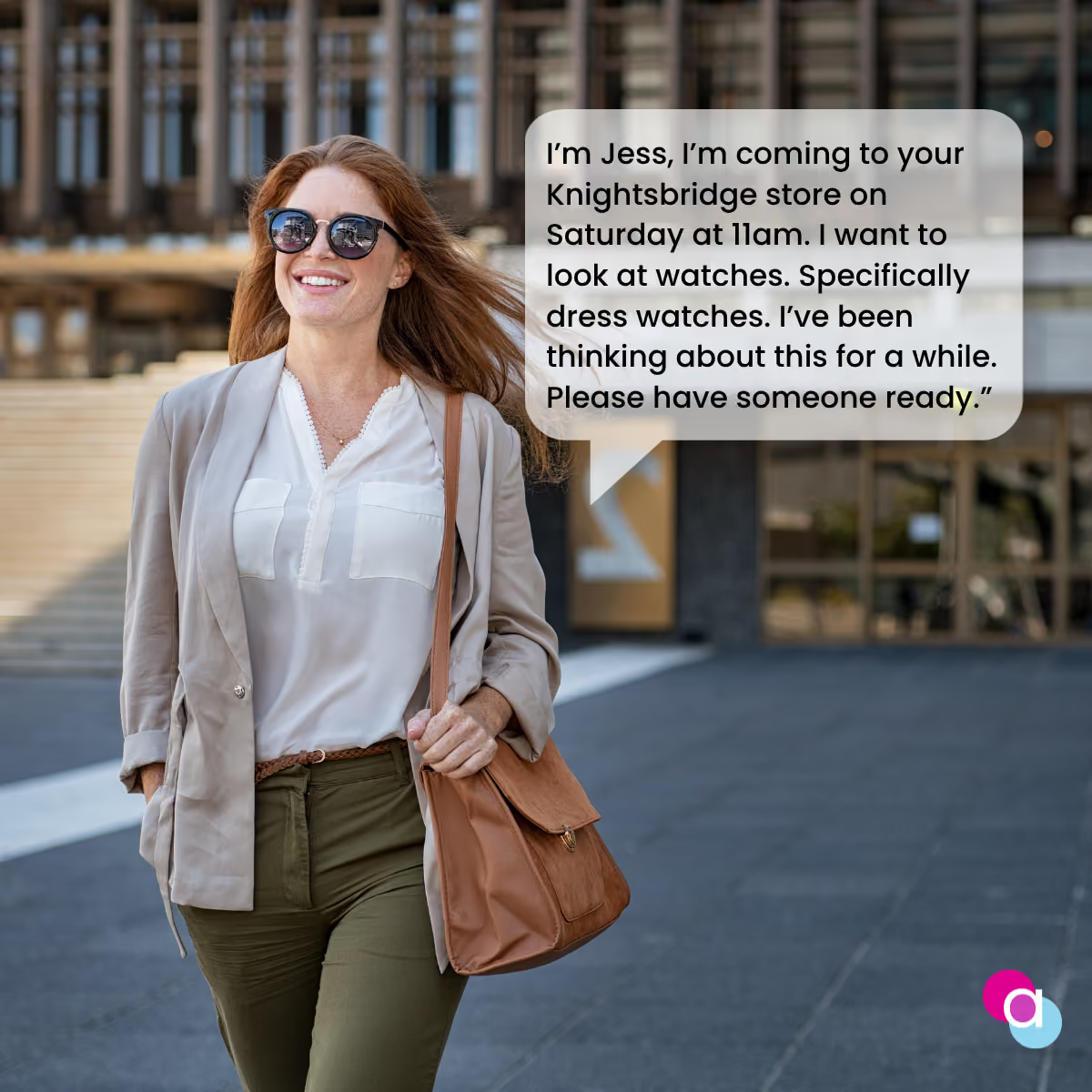
That’s a confession and it contains more usable information than a month of anonymous ad impressions.
Booked Intent is declared demand that has already been committed to a date, a place, and a reason. Every booking gives you, at minimum, five attributes:
Who the customer is (consented, first-party data).
When they’re arriving (timestamped demand).
What they’re coming for (service, category, goal).
Where they’re going (specific store or location).
Which channel brought them in (full attribution).
Stack a week of those signals across a store, or a month across a region, and you have something the industry has rarely had: a reliable, attributable forecast of physical retail demand.
How to forecast store demand using Booked Intent
Imagine it’s Wednesday morning. Instead of a vague projection and a glance out the window, your dashboard tells you exactly what Saturday looks like before it even arrives.
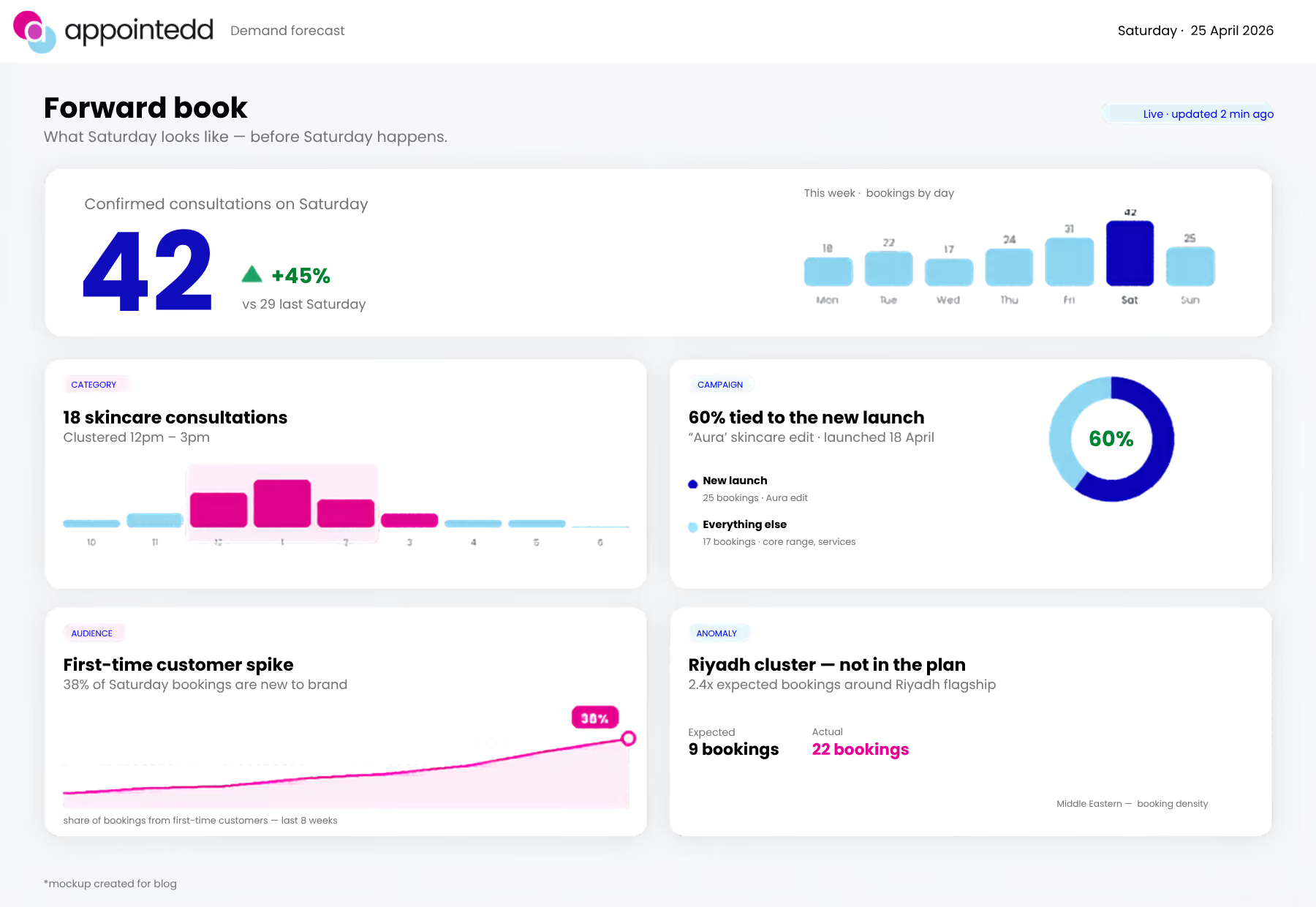
That is future footfall, already in the building metaphorically, just not physically yet. Your decisions stop being guesses:
- Staffing aligns to actual demand peaks, not last year’s schedule.
- Specialists are scheduled to high-value slots, not just the highest headcount.
- Stock moves before POS catches up.
- The in-store experience is designed around named customers who have told you they’re on their way.
You’ve stopped forecasting footfall. Now you’re reading it.
What omnichannel retail forecasting looks like across the funnel
Booked Intent doesn’t sit in a silo. It connects to every layer of the omnichannel customer journey, and that’s where omnichannel retail forecasting earns its name.
Before booking: Content, campaigns, and retail media are now measured by something more meaningful than clicks: committed appointments. Marketing’s goal becomes converting browsing into booking, which is a very different conversation to have with the CFO.
At booking: Intent is captured, timestamped, named, and attributed. This is the moment a passive shopper becomes an active forecast input. You now own a first-party signal that you can act on.
Before the visit: You can shape the conversation before the customer walks in. Send the lookbook, confirm the brief, make the customer twice as likely to spend.
In store: Booked customers arrive prepared, engaged, and ready to spend considerably more than a walk-in would.
After the visit: You can finally close the loop retail has been chasing for years. Booked, ****attended, purchased. Basket uplift, new-to-brand, repeat rate, all tied back to a specific signal, a specific campaign, and a specific store. Every outcome feeds back into the forecasting model, so next week’s prediction is sharper than this week’s.
The commercial case for omnichannel retail forecasting
If all of that sounds operational, here’s the commercial punchline.
.avif)
Put those together and you get the Booked Premium: a booked customer is worth about 25x a walk-in.
That’s the difference between a brand that runs on hope and a business that runs on commitments. Crucially, it’s a number stable enough to plan against. If you know you’ve got 240 confirmed appointments across a region next week, you know (within a very tight range) what they will turn into. You’re forecasting in the real sense, the kind the finance team will let you put in a deck.
From reactive staffing to forecast-led store operations
Reactive staffing happens for one reason: demand is invisible until it’s too late. Booked Intent makes it visible ten days, two weeks, or even a month ahead. Instead of “we need more people, now,” you get “we’ll need more specialists between 1 and 4pm on Saturday, ideally ones who know the new range.” Or instead of “why is it so quiet today?”, you get “bookings are soft midweek, so let’s drive demand on purpose rather than wait for it.”
Why omnichannel retail forecasting works where traditional methods fail
Footfall has always felt inconsistent because most retailers couldn’t see what was driving it. One Saturday works, the next one doesn’t, and nobody can explain why.
Once demand is tied to declared intent, the fog lifts:
- Events produce predictable spikes that you can size in advance.
- Campaigns create measurable booking uplift, and you can see which ones.
- Categories show clear demand windows, by hour, by day, by season.
- Locations reveal their actual local appetite, rather than the one head office assumes they have.
You go from “footfall is unpredictable” to “footfall is a lagging indicator of demand we captured three weeks ago.” That’s a much more useful place to be standing.
How to start forecasting store demand with omnichannel signals
If you’re early in this transition, three things will move you furthest, fastest:
- Make every high-intent moment bookable. Consultations, fittings, test drives, trunk shows, in-store events, service visits, personal shopping slots. Each is a reservation waiting to be taken. If a customer can’t book one in under ninety seconds on a phone, you’re losing the signal.
- Wire the booking data into your commercial stack. A booking dashboard on its own is a diary. Connected to POS, CRM, stock, and retail media, it becomes a forecast. Ops, buying, and store teams should all be reading from the same forward book.
- Run the business from the forward book, not the rear-view report. Staff against it, stock against it, and route your best people to it. The reservation-led restaurant doesn’t just observe its bookings; it runs the business from them. The reservation-led retailer should do the same.
The bigger point
Retail has spent years trying to close the gap between digital signals and physical outcomes. Most of the tools thrown at the problem have been attempts to infer intent from behaviour: to watch what customers do online and guess what they might do offline. Omnichannel retail forecasting, with Booked Intent at its centre, does something less clever and much more useful. It captures intent at the moment the customer declares it, with a date, a time, a place, and a reason already attached.
Customers have started telling us exactly when they’re coming and what they want. The retailers pulling ahead are the ones who noticed and listened. The rest are still out on the pavement, looking at the sky.
If you want to forecast store demand properly, stop relying on last year’s numbers and a hunch for the season. The most valuable signal in retail is what your customers are committed to doing next.
Booked Intent captures the commitment. Appointedd turns it into something you can staff, stock, and sell against.
You start to see demand coming, and you meet it exactly where it lands.
Ready to forecast store demand with omnichannel retail forecasting?
Talk to us about Booked Intent and see how the world’s most forward-thinking retailers are turning declared demand into a measurable commercial advantage.
Read the Victoria’s Secret case study on achieving 100% conversion rate from booking to sale.