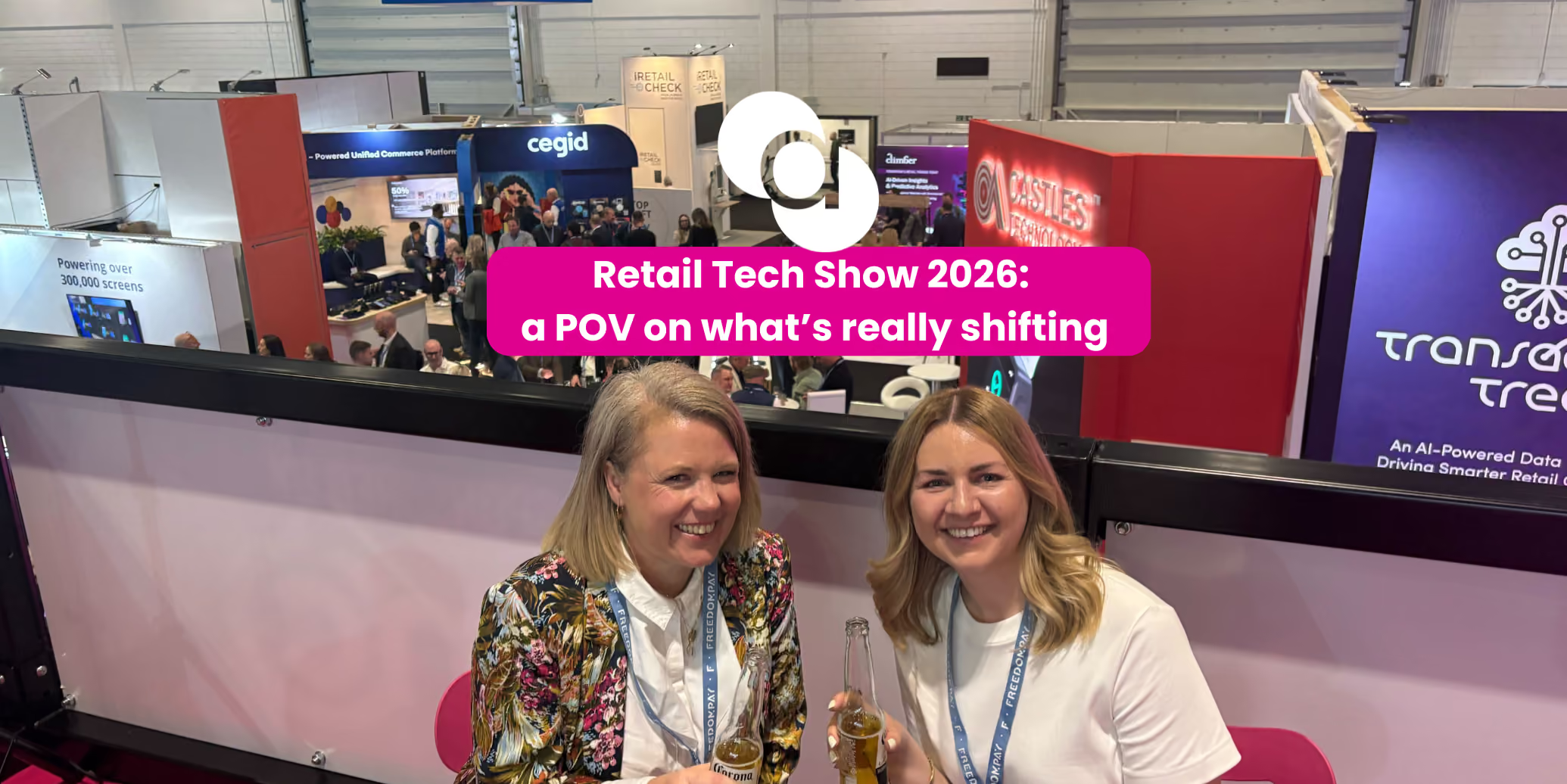
I came away from the Retail Tech Show with a slightly different feeling than I expected. I couldn’t put my finger on it for a while, but having ruminated, I wanted to put my thoughts to paper (🖥️).
If Retail Tech Show is a barometer for where the industry's head is at (it surely is, for the UK at least?), the reading is encouraging. The conversations were honest, the thinking was sharp, and the people in the room weren't waiting to be told what to do next, they were already doing it. But across almost every session, the same quiet tension kept surfacing.
That tension sits squarely between how customers now behave, and how most retail businesses are still set up to operate. I didn’t hear anyone say it directly on stage, but you could feel it sitting underneath a lot of the conversations, and it was the topic of choice around many of the tables at dinner.
The customer has moved faster than the system
There was a moment in Fraser’s Group CCO, David Clark’s talk where it was discussed that traffic from LLMs is still tiny - under 1%. But then he asked the room how many people are already using AI to discover things and every hand went up. That’s quite a telling gap.
The behaviour is already shifting, even if the numbers haven’t caught up yet. It’s not just AI, it’s everything: people discovering through TikTok or a friend’s recommendation, walking into stores before buying online, being gifted something and then coming back later, jumping between channels without really thinking about it. It’s all a bit more fluid than the pre-visit, in-visit, post-visit framing we tend to map.
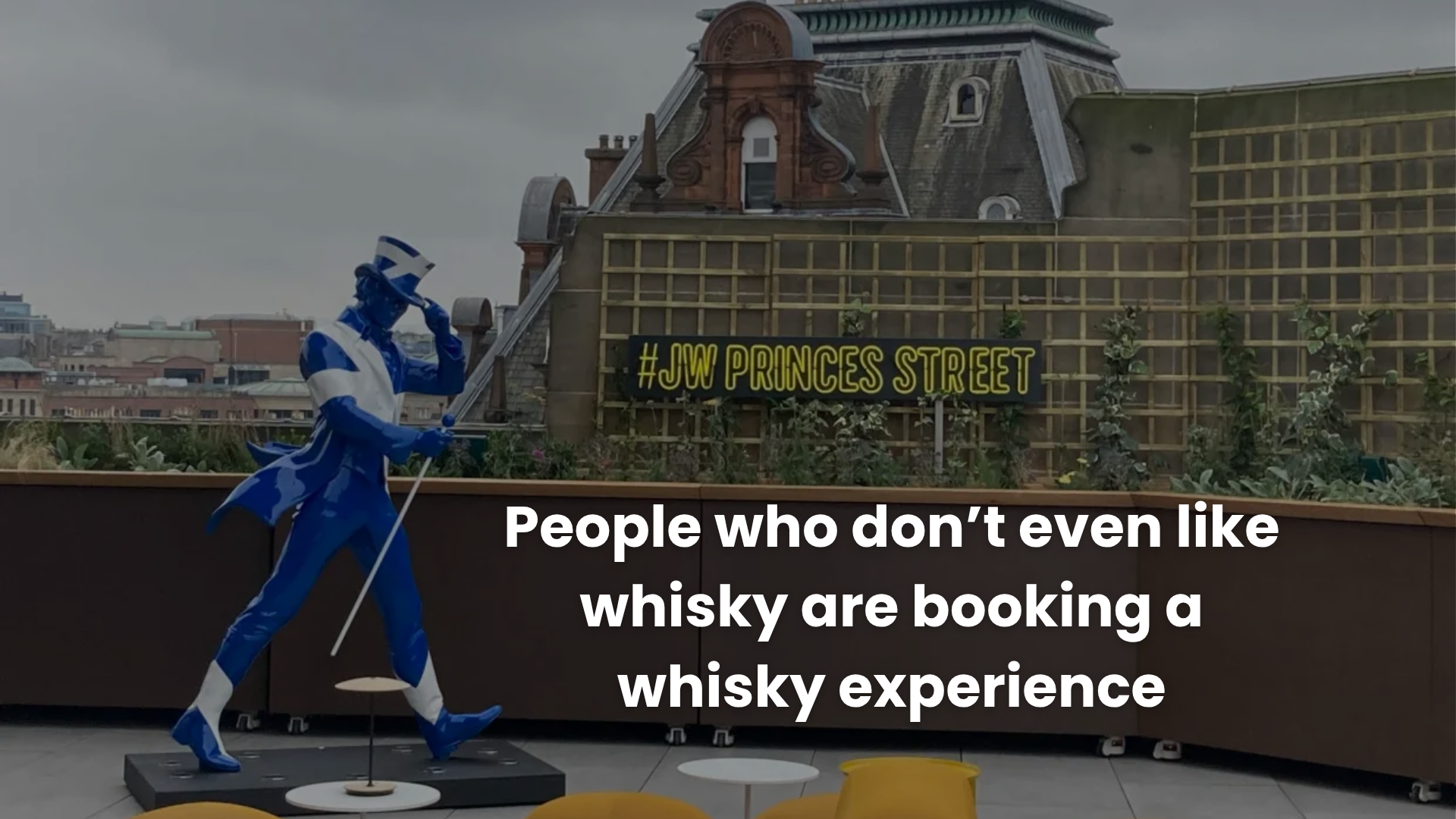
Which makes sense. Customers don’t think in channels, they just act when something feels relevant. This makes the moments they do commit to (booking an instore experience, for example 😉) quite a bit more interesting than they look. In a world where so much of customer behaviour has to be inferred from clicks, scrolls and proxies, those moments are some of the few places where intent is actually declared rather than guessed.
Which brings us to…
Experience used to be the edge. Now it’s the entry fee
There was a lot of talk about experience, which obviously isn’t new. But what has changed is the tone. A few years ago, “experience” felt like something you could lean into as a differentiator. Now it feels more like something you need to just stay in the game. One of the best lines I heard was from Claudia Nappo at LK Bennett during the Growth in Store - It’s All About the Customer session:
“Anything considered exceptional before, is standard now… 20% off an event now isn’t going to cut it - make it experiential.”
You can see it in the stores doing it well. LK Bennett is building moments around Ascot and Chelsea Flower Show rather than just running a promotion. Loaf is averaging 45 minutes to two hours of dwell time by offering movie lounges 🤩, sweet treats, colour expert workshops, not as gimmicks, but as deliberate environments where people can properly think. And hearing Molly Allen, Head of Ecommerce & Performance from Astrid & Miyu speak, I was struck that even getting (or being gifted) a piercing is the perfect experiential start to a deep relationship - who doesn't remember their first piercing, and if it's a great experience, that's a relationship that will last.
The point is creating an environment where a customer can lean in, spend time, ask questions, and get comfortable making a decision. Flashy isn’t the goal, but creating an experience that is genuinely worth someone’s time.
The human bit matters (more than we admit)
There was also a really consistent thread around people. Not in a vague “people are important” way, but in a very practical sense: how staff show up, how they’re trained, how much confidence they have, how well they read the customer.
Jamie Kristow from Cotswold Outdoor talked about spending his first three and a half weeks in stores before making any strategic calls. Not observing at arm’s length, but properly in them, speaking to colleagues, and listening. The impact of this time was evident on his face when he was talking, and he still refers back to those notes.
Loaf’s Beverley Burnett made the same point from a different angle: she’s passionate about in-person training over digital because she knows that presence changes the quality of learning. Their KPI anchor isn’t sales, it’s Trustpilot.
Mitchell Vergeer from Axel Arigato made the subtlest point of all: the first conversation with a customer shouldn’t feel like a sale. The classic “what are you looking for?” gets the classic “just looking” back. Starting differently changes everything that follows. Especially now, when products are comparable, pricing is transparent, and information is everywhere, the interaction itself carries more weight. A good store associate doesn’t just help someone buy something, they help them decide. That’s a very different role.
Another comment that stuck with me from the LK Bennett session: “If you take care of your employees, they’ll take care of your customers.” It sounds obvious, but it’s easy to underestimate how much it shows up in performance.
Data is still the thing everyone is working around
Retail Media, AI, personalisation - all of it came up, as you’d expect. But underneath that, there’s still the same foundational challenge: getting to a point where the data is actually usable.
Richard Lallo from Frasers talked about building a single customer view across 32 million records, using it to power campaigns, target audiences, and measure incremental impact. Their Nike “New Year, New You” campaign (mapping audience clusters to physical locations, running geo-targeted screens, OOH and experiential events, and measuring lift in Liverpool and Manchester against control regions) is a genuinely impressive piece of Retail Media execution. But even Richard was clear that the foundations are the hard bit, not the technology.
Ann Summers’, Jeannette C. put it most plainly:
“AI is nothing without good data.”
Everyone in the room knows this, it’s just that solving it properly takes time and cuts across a lot of the organisation. Which is why, in practice, a lot of businesses are still making decisions with partial visibility - especially about what customers are actually trying to do, not just what they’ve already done.
That gap (between what customers have done and what they're about to do) is the bit that's interested us most. Almost all of the data retail already has is behavioural and historical: clicks, baskets, transactions, sessions. The moment a customer books or commits to something is one of the few places they tell you, directly and with their own words, what's coming next: who they are, what they want, when they want it, where, and increasingly why. Treating that declared intent as a proper data layer in its own right (rather than a transactional artefact tucked inside a calendar) is still genuinely underused, and (to the totally biased gang here at Appointedd) feels like a quietly significant piece of the "good data" Jeannette was pointing at.
Community is real commercial infrastructure
This came through most strongly in the sports and outdoor panel hosted by Commerce Futures' Jamie Hancox, but it was present across the event.
Alpkit’s David Hanney talked about building their brand (growing 20-fold in the 2010s) without performance marketing. Not because they were philosophically opposed to it, but because they knew where their customers were. In the Lakes, North Wales, on the trails. So they went there. Ran events, opened stores in those locations, built a repair station that fixes all brands, not just their own, created a travel series. The store became a clubhouse rather than a shop: “We didn’t need Google to tell us where our customers were.”
Sigma Sports have done something similar with their YouTube content, said Co-Founder Ian Whittingham. Long-form interviews with professional cyclists that have accumulated hundreds of millions of views. Not monetised, just genuinely good. The point isn’t reach, it’s belonging.
What struck me is how clearly this maps to commercial outcomes. Across a ton of different businesses, and different customer profiles, customers who engage at that level (who attend events, book services, and come back for the community not just the product) behave very differently to those who don’t.
It’s getting more complex, not less
Something that came through quite clearly (even if it wasn’t always said explicitly) is that retail isn’t simplifying as it evolves. It’s layering. More channels, more expectations, more decisions, all at the same time. Jeannette nailed it: “Retail isn’t getting simpler.”
That’s probably the most honest way of putting it. It changes what good looks like. Less about having the perfect setup and more about being able to operate well within that complexity.
Steve Borg from White Stuff made a point that I thought deserved more airtime: most businesses fail at transformation not because they lack ambition, but because they try to solve everything at once.
“If you try to solve everything, you end up solving nothing.”
Steve’s argument for simplification wasn’t about doing less, it was about doing difficult things in a more disciplined way. Focus on what you’re actually ready to change. Sequence properly. Get specific about who needs to feel the benefit and when. It sounds straightforward. It isn’t, especially in organisations where everyone has a compelling case for why their thing should be prioritised.
Retailers doing well aren’t doing the most
There was a nice moment in Komal Koul’s (Currys) talk where she described narrowing peak trading down to two or three priorities (”big bets”) and then committing hard to them. Everything else either supports that or waits.
“What are the two or three things you’re really going to win on?”
Nothing revolutionary, just disciplined. She was equally clear about planning for failure, not just success - writing detailed playbooks for the scenarios most likely to go wrong, so that when they do (and they do), the response is structured rather than panicked.
“No amount of planning is enough planning.”
Similarly from Steve Borg (White Stuff), a strong push on simplification and sequencing, not the most ambitious roadmap. The framing that stayed with me: start from the end state. What does the world look like after this change has landed? Then work backwards. Not a dramatic shift in strategy, more a tightening of it.
So where does that leave things?
Not in a bad place, actually. If anything, it feels like retail is in the middle of a shift that most people can already see (even if it hasn’t fully played out yet).
Experience matters, but it’s expected now. People matter, maybe more than we realised. Data is the enabler but still being worked through. Discovery keeps spreading out rather than consolidating, and complexity is climbing rather than easing off.
None of that is especially surprising on its own. But when you put it together, it does suggest something slightly bigger: the model retail has been built around (even quite recently) is starting to feel a bit misaligned with how customers actually behave day to day. Not broken, just slightly out of sync.
Final thought
If there’s a thread running through all of this, it’s that customers haven’t become more complicated for the sake of it. They’ve just become more fluid and retail is in the process of catching up to that.
Sebastian Picardo from Monica Vinader said something near the end of his session that I thought summarised it quite well, even though he was talking specifically about luxury:
”The relationship is all you have… if you don’t have a customer, you don’t have anything.”
It’s true across the board. Products can be copied, channels replicated, prices matched. The relationship (built through experience, through people, through moments that feel genuinely worth a customer’s time) is the harder thing to replicate.
Some retailers are further along with that than others. Most are somewhere in the middle. Which is what makes it interesting right now. The opportunity isn’t spotting something completely new; it’s recognising what’s already happening, and adjusting just enough, in the right places, to stay in step with it.
[If you’ve made it this far, you can probably see where this is going… Obligatory bit where I link to Appointedd and tie it all neatly together… But in the midst of all this fluidity, we spend a lot of time thinking about the moment between a customer deciding they want something and actually buying it. We call this Booked Intent®: the declared, first-party signal that sits between digital interest and physical action. Turns out that moment is more interesting (and more commercially valuable) than it looks. If it's a conversation you're having internally right now, let’s chat. I'll buy the coffee.]